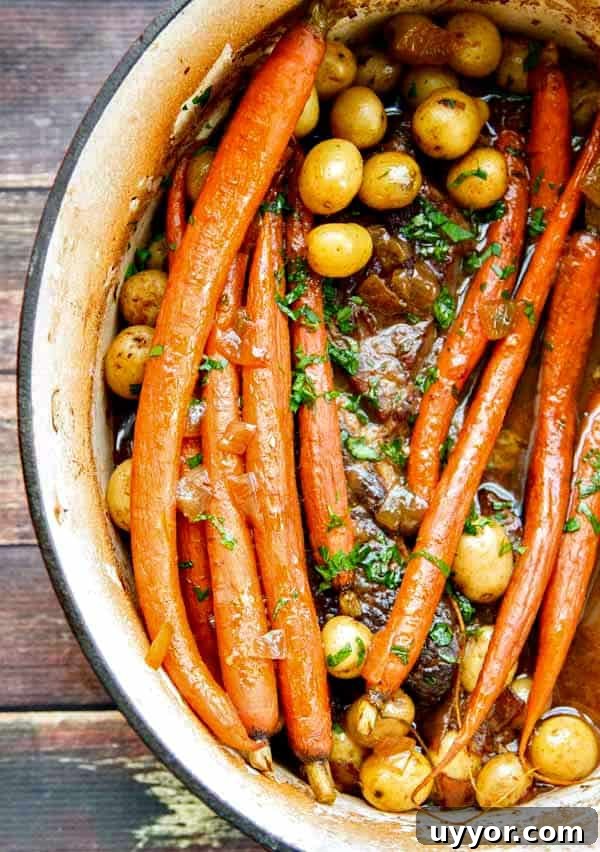
Pot roast is one of winter’s greatest comforts — the reward for saying goodbye to summer and the perfect consolation for every snowy day.
A well-braised chuck roast has a kind of magic: rich, savory, and tender enough to fall apart with a fork. This version gets a bright, savory lift from balsamic vinegar and Dijon mustard, a small twist that gives the classic pot roast a deeper, more complex flavor.
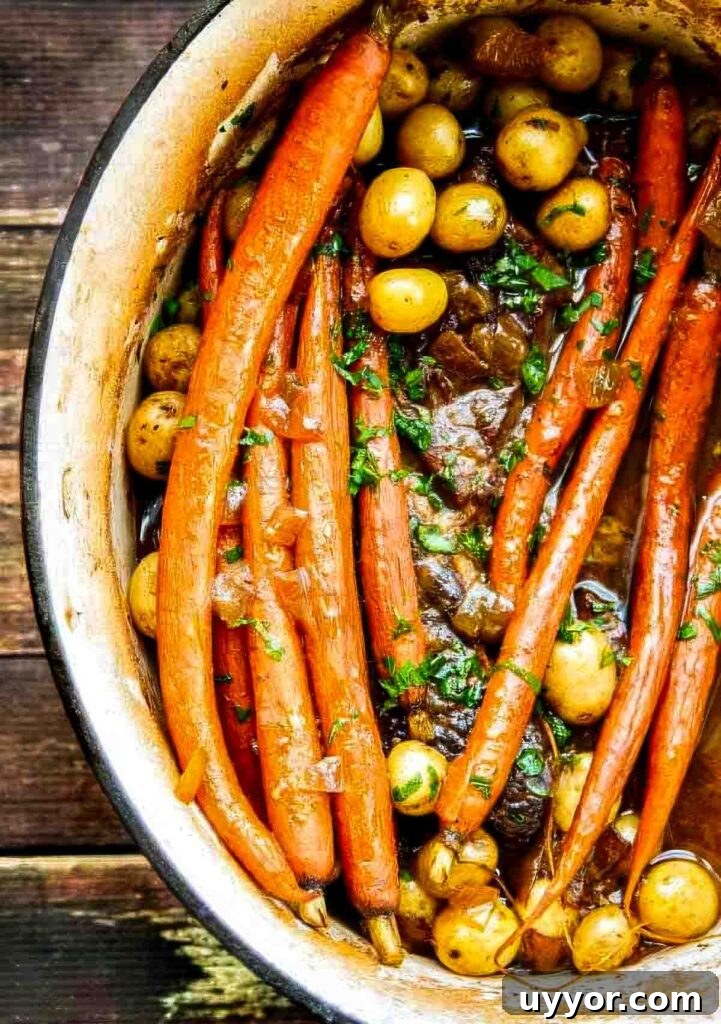
Why You’ll Love This Chuck Roast Recipe
- Fork-tender and full of flavor: Slow cooking breaks down the connective tissue in chuck roast, producing melt-in-your-mouth meat. The balsamic and Dijon round out the savory profile with a pleasant tang.
- Flexible cooking methods: This recipe works equally well in the oven, slow cooker, or Instant Pot, so you can choose the method that fits your schedule.
- Simple ingredients: Most ingredients are pantry staples — beef broth, onions, balsamic vinegar, Dijon, a roast, and vegetables — making it an easy dish to pull together.
- One-pot meal: Carrots and baby potatoes cook with the beef, creating a complete, satisfying dinner with minimal cleanup.
- Great leftovers: Pot roast often tastes even better the next day. Use leftovers for sandwiches, tacos, or reheat with the sauce for another hearty meal.
What Is Chuck Roast?
Chuck roast comes from the shoulder of the cow. It’s a working muscle, which makes it relatively tough when raw but ideal for slow, moist cooking. That toughness is what produces such rich flavor and tender texture after braising. Chuck roast is typically budget-friendly and sold as boneless or bone-in; either will work in this recipe, though bone-in can add a little extra depth to the sauce.
Ingredients You’ll Need
This is a straightforward list of ingredients for a fall-apart tender chuck roast:
- 2–3 tablespoons vegetable, canola, or avocado oil for searing.
- 4 pounds chuck roast, well-marbled, boneless or bone-in.
- Kosher salt and freshly ground black pepper to season generously.
- 1 medium to large yellow onion, chopped.
- 1/3 cup balsamic vinegar — the flavor booster that reduces to a syrupy glaze.
- 2–3 tablespoons Dijon mustard to add brightness and depth.
- 5 sprigs fresh thyme, tossed whole.
- 2 cups reduced-sodium beef broth as the braising liquid.
- 2 bunches small carrots, trimmed; baby carrots work if preferred.
- 1 pound very small baby potatoes (white or red), or larger potatoes halved so pieces are uniform.
- Optional: a splash of red wine, a few garlic cloves, or a spoonful of tomato paste to vary the flavor.
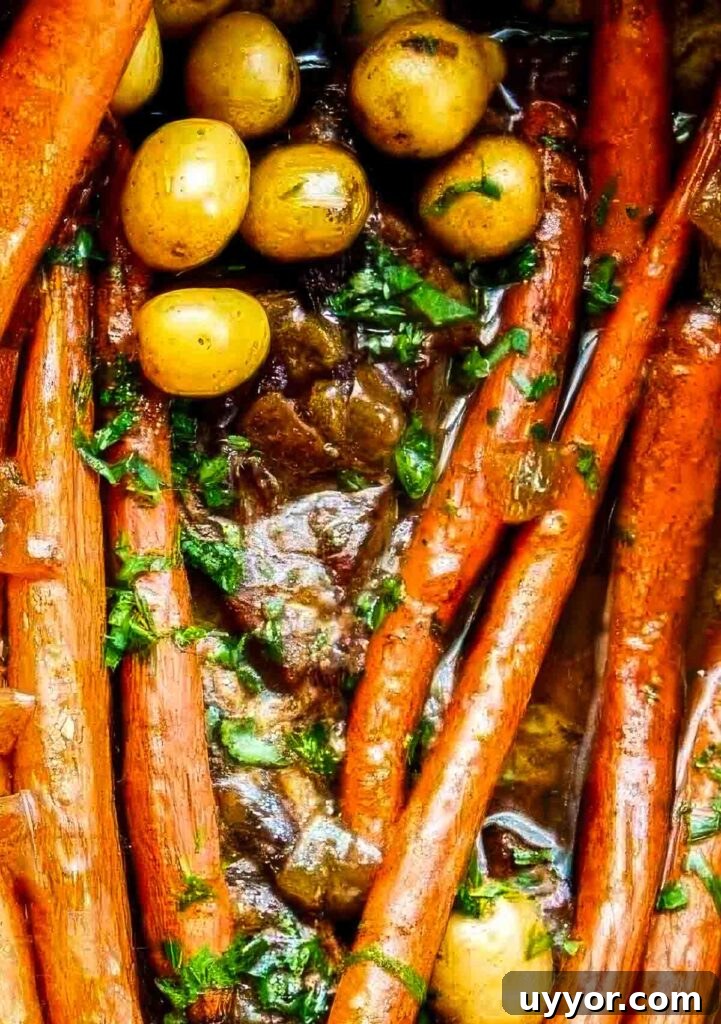
Step-by-Step Instructions (Oven, Slow Cooker, Instant Pot)
This recipe is adaptable to different cookers. All methods start by searing the roast and building flavor with onions, balsamic, and Dijon.
Oven-Braised Method
- Preheat the oven to 300°F (150°C).
- Heat oil in a large Dutch oven over high heat. Season the roast with salt and pepper and sear on all sides until deeply browned. Remove the roast and set aside.
- Reduce heat to medium and sauté the chopped onion in the pan drippings until softened, about 5 minutes.
- Add the balsamic vinegar and bring to a boil, letting it reduce for 4–5 minutes until slightly syrupy. Stir in the Dijon mustard.
- Return the roast to the pot, add thyme sprigs, and pour in the beef broth.
- Cover and transfer to the oven. Braise for about 3 hours.
- Add the carrots and baby potatoes and continue cooking 30–60 minutes more, until the vegetables and meat are very tender.
Slow Cooker Method
- Follow the oven steps through reducing the balsamic and stirring in Dijon.
- Transfer the roast, onions, balsamic-Dijon mixture, thyme, and broth to the slow cooker.
- Cook on LOW for 8 hours, adding the carrots and potatoes halfway through the cooking time.
Instant Pot Method
- Use Sauté to sear the roast on all sides. Remove and cook the onions in the drippings.
- Add the balsamic and Dijon, reduce slightly, then pour in the beef broth and scrape up any browned bits.
- Return the roast, add thyme, seal the lid, and cook on HIGH pressure for 50 minutes. Allow a natural release of about 15–20 minutes.
- Add the vegetables and pressure-cook on HIGH for 4–5 minutes, then quick-release.
This recipe is forgiving and easy to modify. If you want to elevate the meal for a special occasion, consider finishing the sauce on the stovetop and thickening it with a cornstarch slurry before serving.
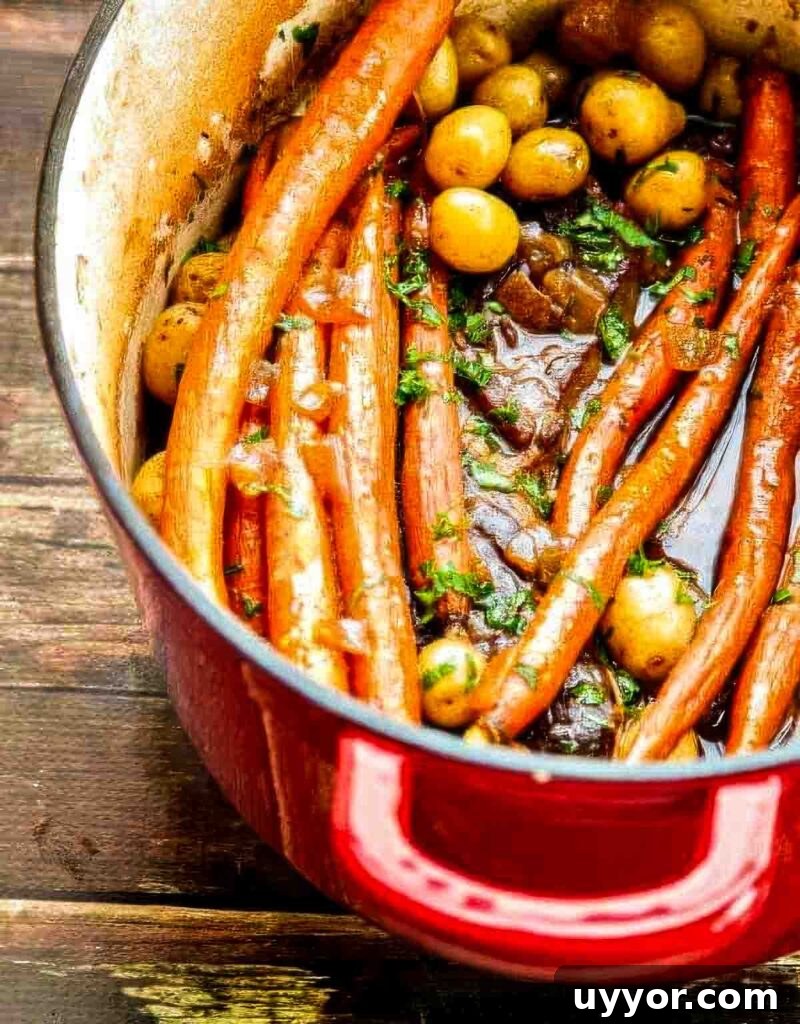
Serving Suggestions
Serve this pot roast in any of these classic, comforting ways:
- Over mashed potatoes to soak up the sauce.
- With crusty bread for mopping the pan juices.
- Alongside a simple green vegetable like roasted green beans or sautéed spinach.
- On sandwiches — shred leftovers, melt cheese on a roll, and add a dollop of Dijon or horseradish.
- Family-style — bring the Dutch oven to the table and let everyone serve themselves.
Variations and Substitutions
This pot roast adapts well to swaps and additions:
- Meat: Brisket or bottom round can substitute for chuck, though textures will vary.
- Vegetables: Add parsnips, turnips, rutabaga, mushrooms, or sweet potatoes.
- Flavor boosts: A splash of dry red wine, a spoonful of tomato paste, crushed garlic, or a rosemary sprig enhance the sauce.
- Mustard: Dijon is recommended, but whole grain or stone-ground mustard also works.

Make-Ahead, Storage & Reheating Tips
Pot roast stores and reheats well, often improving after a day as flavors meld.
Make-Ahead
- Make the roast a day ahead and refrigerate covered. Reheat gently before serving.
Storage
- Fridge: Store leftovers in an airtight container for up to 4 days.
- Freezer: Cool completely, then freeze in portions with some of the juices for up to 3 months.
Reheating
- Oven: Reheat covered at 325°F until warmed through, about 30 minutes.
- Stovetop: Simmer gently over low heat, adding a splash of broth if needed.
- Slow cooker: Warm on LOW for 2–4 hours for larger portions.
- Microwave: Reheat individual servings in 1-minute intervals at 50% power, with some sauce to prevent drying.
Frequently Asked Questions
Is chuck roast the same as pot roast?
Not exactly. “Pot roast” is the dish; “chuck roast” is one of the most common cuts used to make it because of its marbling and texture when braised.
Is chuck roast the same as rump roast?
They come from different parts of the cow. Chuck is from the shoulder and has more connective tissue and fat, which makes it ideal for braising. Rump roast is leaner and can be drier if overcooked.
Is chuck roast the same as round roast?
Round roast is from the rear leg and is leaner; it benefits from slicing thin. Chuck roast is fattier and better suited to long, slow braising.
Are chuck roasts tough?
Raw chuck is tough, but slow cooking breaks down the connective tissue, resulting in tender, flavorful meat.
Can chuck roast be shredded?
Yes. After long, slow cooking the roast shreds easily with two forks and is excellent in sandwiches or tacos.
What kind of wine pairs well with chuck roast?
Robust reds like Cabernet Sauvignon, Zinfandel, or Syrah complement the rich flavors of the roast.
Can I make this pot roast in a slow cooker or Instant Pot?
Yes. The slow cooker and Instant Pot instructions above outline how to adapt the recipe to those methods.
What are the best vegetables to serve with pot roast?
Classic choices are carrots and potatoes. Parsnips, turnips, pearl onions, mushrooms, or sweet potatoes are also excellent options.