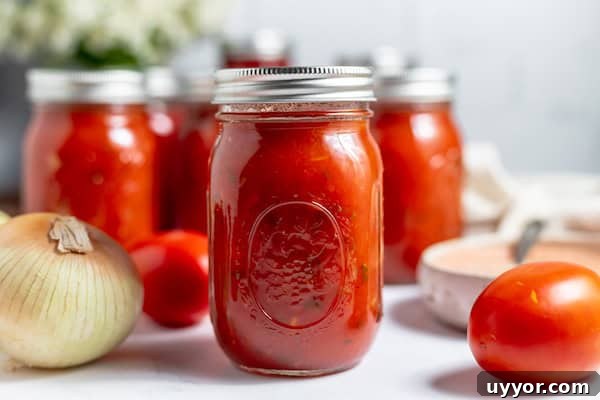
Canning lets you preserve garden produce and create ready-to-use convenience foods for your pantry. A jar of homemade tomato soup base makes a fast lunch—perfect with a grilled cheese.
When canning tomato soup, you preserve the soup base rather than adding dairy before canning. Cream or milk is stirred in when you reheat the soup, which ensures safe preservation and keeps flavor bright.
In these photos I add a generous amount of cream when serving, but the amount is up to you. The important part is a flavorful base packed with onion, garlic, and fresh basil.
The Easiest Way to Can Tomato Soup
My canning method saves time and retains fresh flavor because I don’t pre-sauté the vegetables. Skipping that step cuts down on mess and dirty dishes while still delivering a well-cooked, tasty result after simmering the combined ingredients.
This recipe uses the water bath canning method rather than pressure canning. Tomato products are acidic enough for boiling water bath canning if you add bottled lemon juice or citric acid to control pH, as recommended by food safety authorities.
All you need is a canner deep enough to cover jars by at least an inch of water and a rack to keep jars off direct heat. A clear lid on a stainless canner makes it easy to monitor the boiling water.
Ingredients for canning tomato soup
Because you’re canning a concentrated soup base, the ingredient list is simple:
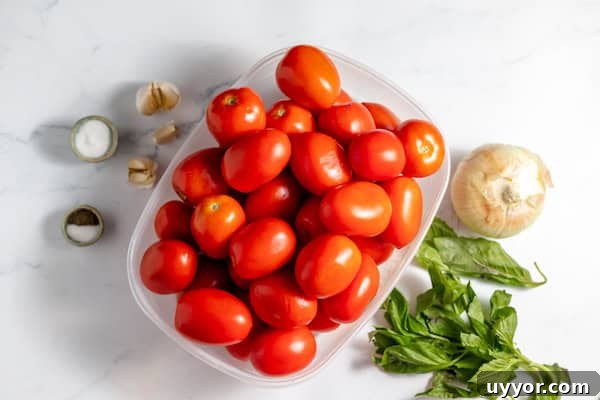
- Tomatoes (Roma or paste varieties like Amish Paste work well)
- Onion
- Garlic
- Salt
- Pepper
- Sugar (optional, to balance acidity)
- Fresh basil
- Bottled lemon juice or citric acid (for pH control)
All ingredients are combined raw (except the tomatoes are cooked and strained or blended as described below).
How to prepare tomatoes
You can prep tomatoes in several ways depending on your batch size and equipment.
With a strainer
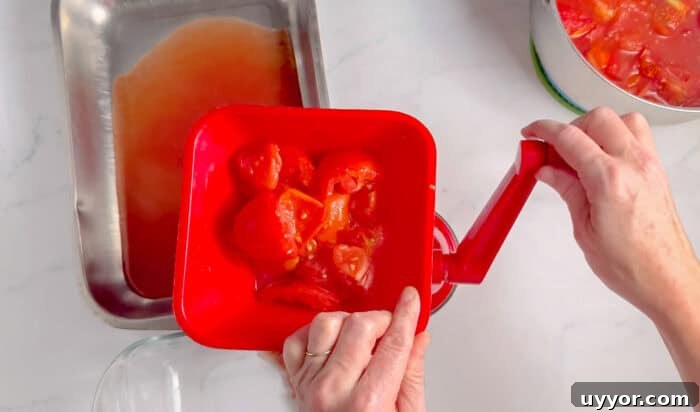
If you preserve many tomatoes, a fruit/tomato strainer speeds up processing and reduces mess. Options include mixers attachments, hand-crank strainers (Johnny Applesauce), or countertop units that suction to the surface. Strainers remove skins and seeds and yield smooth juice and pulp.
Quarter the tomatoes and gently cook until softened before straining. Cooking first helps prevent separation in the jar where water sinks and pulp floats.
Squeeze some juice from the seed cavities into the pan to prevent sticking, stir often, and cook without adding extra water if possible. After cooking, strain the tomatoes through your strainer.
If you don’t have a strainer, you can peel, core, deseed, cook, and blend tomatoes in small batches, then re-cook the puree to concentrate the flavor. This manual method removes much of the watery seeds and reduces overall reduction time.
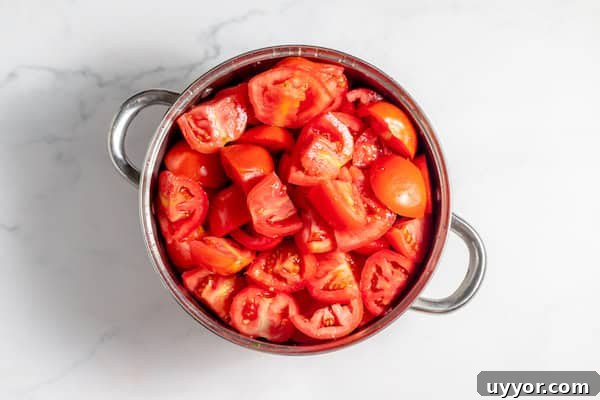
After cooking, strain or blend and return the tomato liquid to the pot for making the soup base.
How to Can Tomato Soup
- After straining or blending the tomatoes, pour the tomato juice into a large pot.
- Quarter the onion, peel the garlic, and blend onion, garlic, and basil until fairly fine.
- Stir the pureed aromatics into the tomato juice with sugar, salt, and pepper.
- Heat over low–medium until a gentle simmer is reached.
- Cook down the mixture until it reduces by about 25% and is slightly thicker than traditional tomato soup.
- If you removed seeds and cores before blending, less reduction is needed.
- Optionally blend with an immersion blender or in batches for a smooth texture.
- Ladle the hot soup base into sterilized hot jars, leaving 1/2 inch headspace. A canning funnel makes this step cleaner and helps prevent debris on the rim.
- Add bottled lemon juice or citric acid for acidity control: 1 tablespoon lemon juice or 1/4 teaspoon citric acid per pint; 2 tablespoons lemon juice or 1/2 teaspoon citric acid per quart.
- Wipe jar rims clean, apply lids and bands, and tighten to fingertip tight.
- Process jars in a boiling water bath: 40 minutes for pints, 45 minutes for quarts. Ensure water covers jars by about 2 inches and maintain a rolling boil for the processing time.
- When time is up, turn off heat and let jars sit in the canner until cool enough to handle, then remove and let sit undisturbed for 24 hours.
- Check seals after 24 hours and store sealed jars in a cool, dark place.
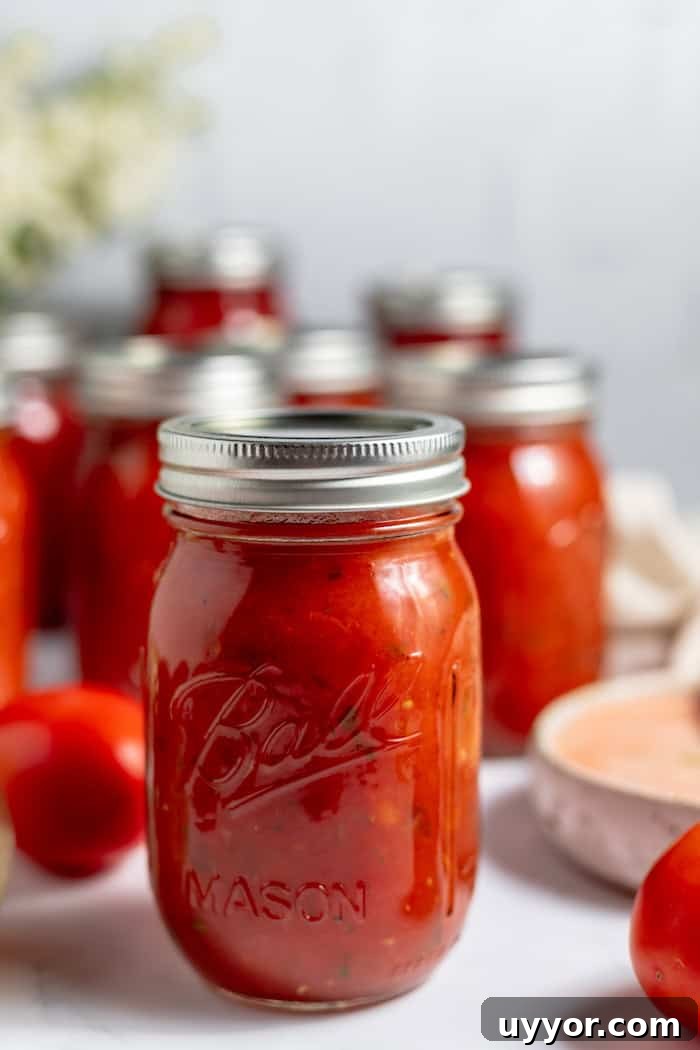
To use the canned soup base
Pour the soup base into a saucepan and heat. For a creamy soup, stir in about 1/8–1/4 cup heavy cream per pint, or adjust to taste with half-and-half or milk.
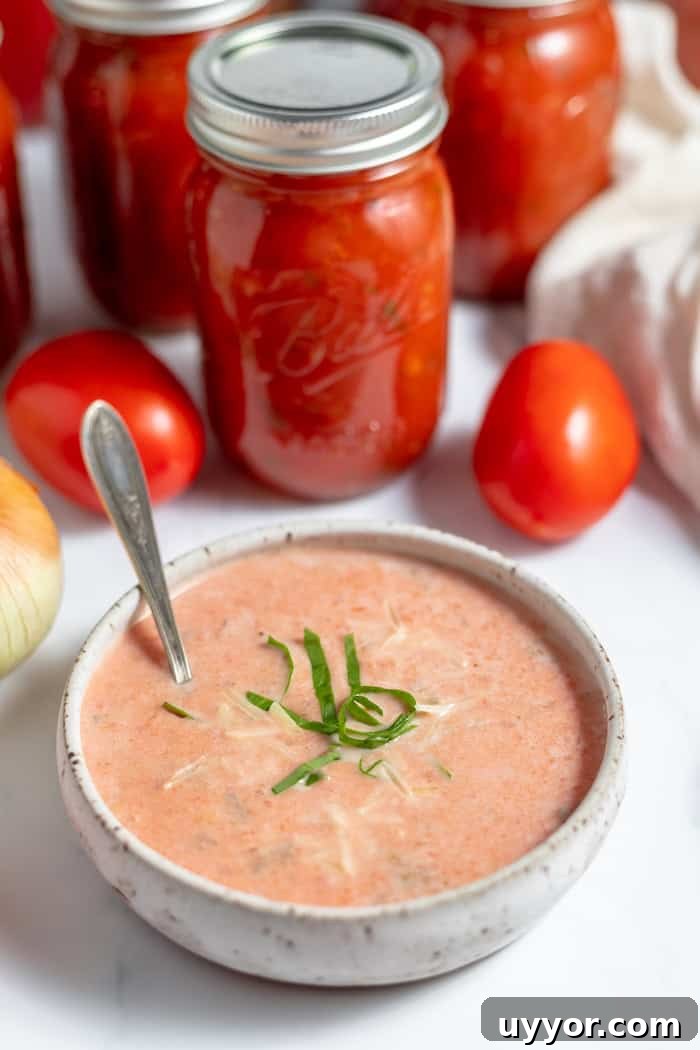
Serve with grated Parmesan, croutons, or a grilled cheese sandwich. The base also works well as a starting point for heartier soups—add vegetables, beans, or browned hamburger for a chunky, filling meal.
Notes and tips
- Adjust cream amount when reheating to suit your preference.
- Use bottled lemon juice or measured citric acid for consistent acidity—don’t substitute fresh-squeezed lemon juice for canning safety.
- Label jars with the date and contents; use within a year for best quality.
This method yields a flavorful, shelf-stable tomato soup base so you can enjoy homemade convenience foods from your pantry all year long.