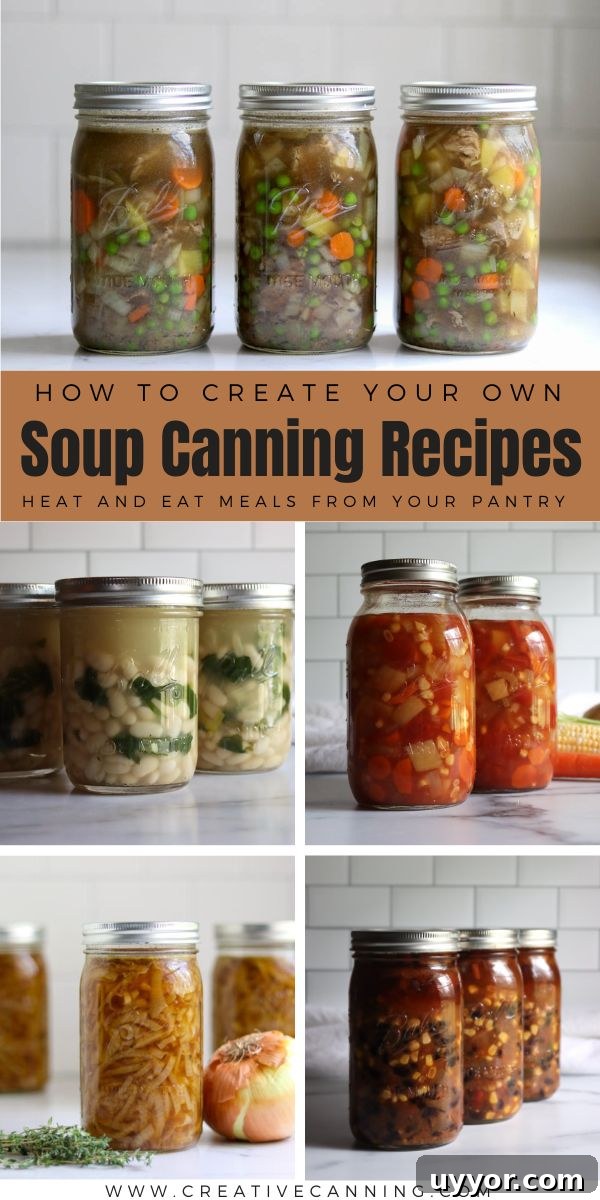
Canning soup at home lets you preserve healthy, homemade meals for your pantry. By choosing your ingredients you control quality, and recent guidance now explains how to safely pressure-can your own soup recipes.
Home-canned soups are a convenient way to capture seasonal produce and have ready-made meals on hand. While tested recipes are always safest, the National Center for Food Preservation and the University of Alaska Extension have published clear pressure-canning guidelines that let you develop your own shelf-stable soup recipes if you follow specific rules.
Their guidance divides soups into two types: brothy soups and hearty soups. Each type has rules about allowable ingredients, packing method, and required processing times to ensure safety.
Brothy soups are those where jars are filled about halfway with solids and the rest is liquid—classic chicken soup is a common example. Heat penetrates these thinner mixtures more easily, so processing times are shorter and a wider range of ingredients is permitted.
Hearty soups are dense jars packed mostly with solids and only a small amount of broth. Examples include beef stew or chowder bases where jars are packed with ingredients and hot broth is added before sealing.
These methods also apply to meal-in-a-jar style recipes such as pot roast, beef stroganoff, sloppy joe filling, or chili con carne. The flexible guidelines can help you modify existing pressure-canning recipes to match either the brothy or hearty soup approach—provided you follow the ingredient restrictions and adjust processing time accordingly.
Understanding Soup Canning Basics
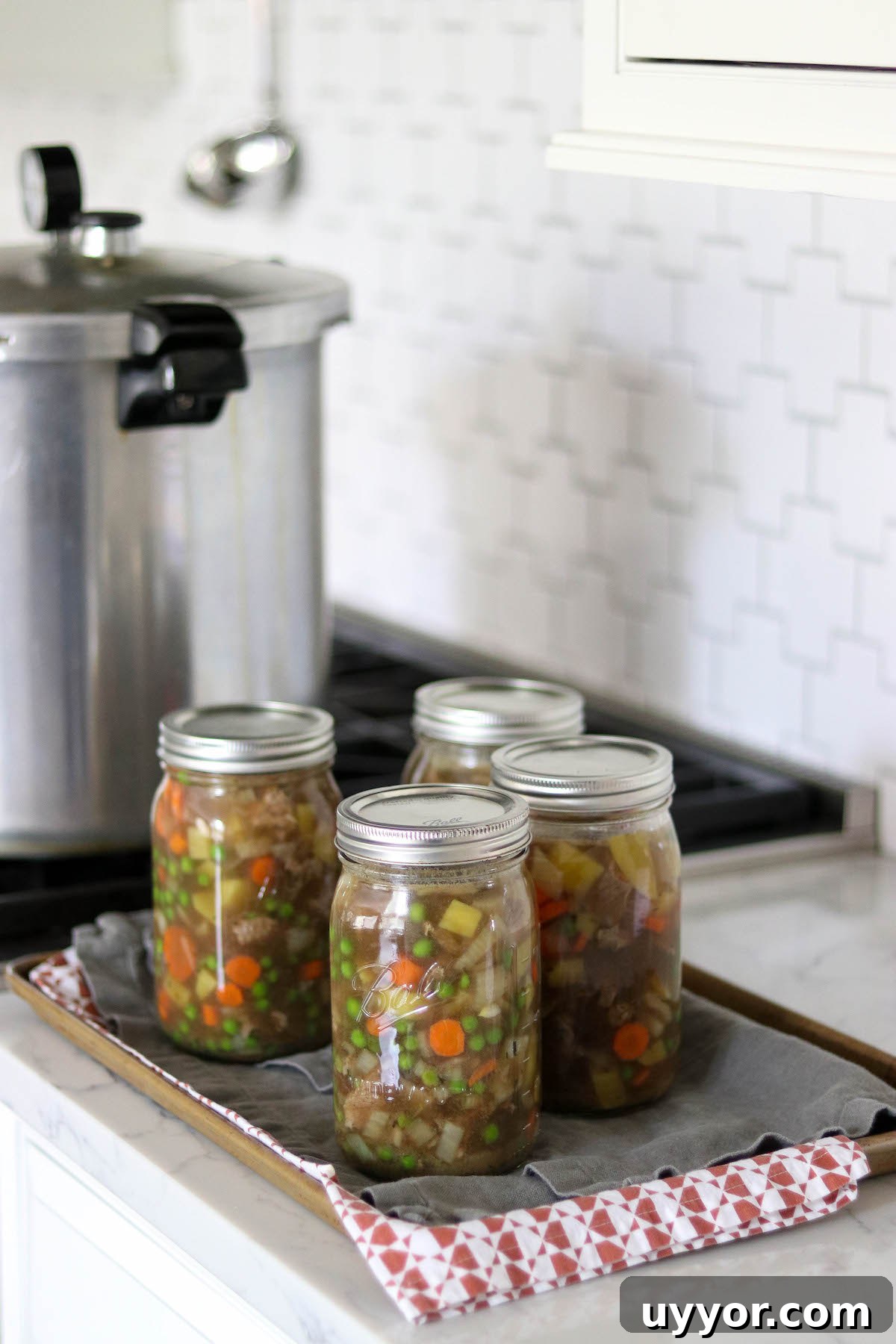
Soups that include low-acid ingredients such as vegetables, meat, or seafood must be pressure canned to eliminate harmful bacteria and create a safe shelf-stable product. Water-bath canning is not safe for these low-acid soups.
If you’re new to pressure canning, consult a reliable beginner’s guide so you understand equipment and technique before attempting soup canning.
Important Safety Considerations
Some ingredients are unsafe or incompatible with pressure canning and must be excluded:
- Thickening agents such as flour, cornstarch, or bread/dumpling products, which inhibit heat penetration.
- Dairy products like milk, cream, and cheese are not approved for pressure canning.
- Pasta and grains that expand and become too dense during processing.
Guidelines for Brothy Soups
Follow these steps when making brothy soups to can safely and consistently.
Allowed in brothy soups:
- Fresh vegetables (carrots, celery, bell peppers, etc.)
- Meat or poultry, cut into pieces
- Fish in small pieces
- Pre-soaked and rehydrated beans
- Water, broth, stock, wine, or juice
- Fresh or dried herbs and spices to taste
Not allowed:
- Thickening agents (flour, cornstarch) or bread products
- Dairy (milk, cream, cheese)
- Noodles, rice, or other grains
- Pureed vegetables
- Ham, bacon, or cured meats
- Any ingredient without a specific canning guideline
Any ingredient you add should have established canning guidance. Many common vegetables—onions, tomatoes, peppers, potatoes—do have approved canning instructions and may be used. Some items, like cabbage, lack pressure-canning evaluations and should be avoided unless a tested recipe exists.
University Extension advice allows modest amounts of celery, garlic, and leeks in home-canned soups.
Preparing Brothy Soups
- Choose ingredients: Ensure every ingredient you include has its own canning recommendation. Hot pack (pre-cooking) is recommended for quality.
- Prepare ingredients:
- Vegetables: wash, peel, chop, and hot-pack as required.
- Meat/poultry: cook until tender, remove bones and excess fat, cut into bite-sized pieces. Brown ground meat.
- Seafood: cut into small pieces; small bones may be left as they soften during processing.
- Dried beans/peas: fully rehydrate by soaking, boiling 2 minutes, and resting for one hour; unlike standard bean canning, pre-soaking is required but full pre-cooking is not.
- Combine and partially cook: Put solids in a pot, add enough liquid to cover plus 2–3 inches above solids, bring to a boil and simmer 5 minutes. Season lightly; don’t thicken.
- Fill jars: Use a slotted spoon to fill jars half with solids, top with liquid to leave 1-inch headspace.
- Process: Remove bubbles, wipe rims, apply lids, and process in a pressure canner according to times below.
Note that some ingredients expand during processing, so jars that begin half full may finish fuller once cooled.
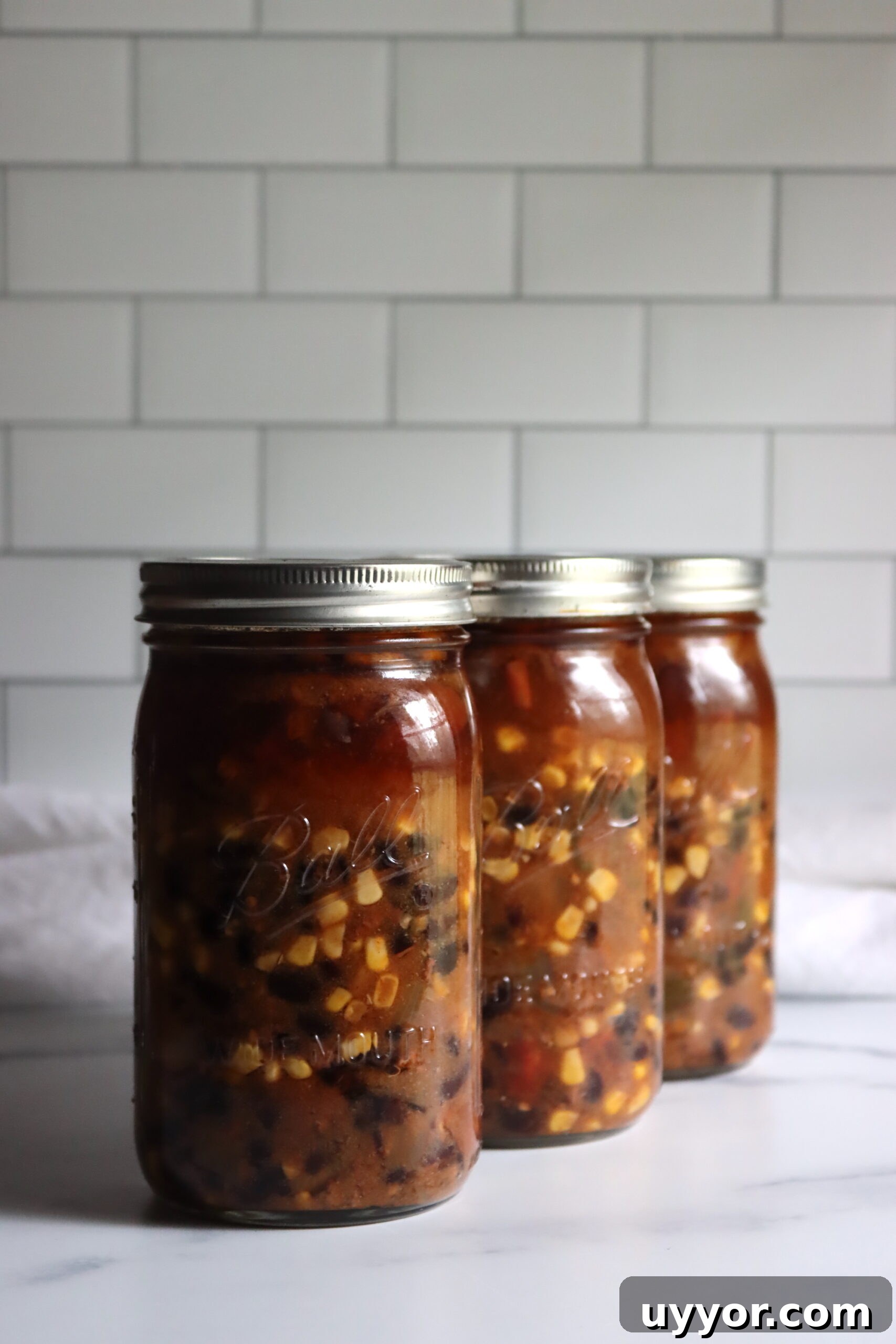
Processing Times for Brothy Soups
Process brothy soups for 60 minutes for pints and 75 minutes for quarts. These times are consistent across elevations; adjust pressure for altitude as shown below.
If the soup contains seafood, process both pints and quarts for 100 minutes.
Altitude pressure adjustments for brothy soups:
For dial gauge canners:
- 0–2,000 ft: 11 lb
- 2,001–4,000 ft: 12 lb
- 4,001–6,000 ft: 13 lb
- 6,001–8,000 ft: 14 lb
For weighted gauge canners:
- 0–1,000 ft: 10 lb
- Above 1,000 ft: 15 lb
Guidelines for Hearty Soups
Hearty soups are jars packed mostly with solids and a small amount of liquid. The University of Alaska Extension has published instructions for safely canning these denser soups.
- Select ingredients: Use only items that have individual canning recommendations. Unlike brothy soups, hearty soups must exclude:
- Dry beans or legumes
- Leafy greens (kale, spinach, etc.)
- Cream-style corn (regular corn is allowed)
- Winter squash (summer squash is allowed)
- Sweet potatoes
- Combine and preheat: Put solids in a pot, cover with hot broth or water, bring to a boil and simmer 5 minutes for a hot pack.
- Fill jars: Pack solids leaving 1-inch headspace, add hot broth to reach the headspace, remove air bubbles, wipe rims, and apply lids.
- Process: Pressure-can according to the time requirements below.
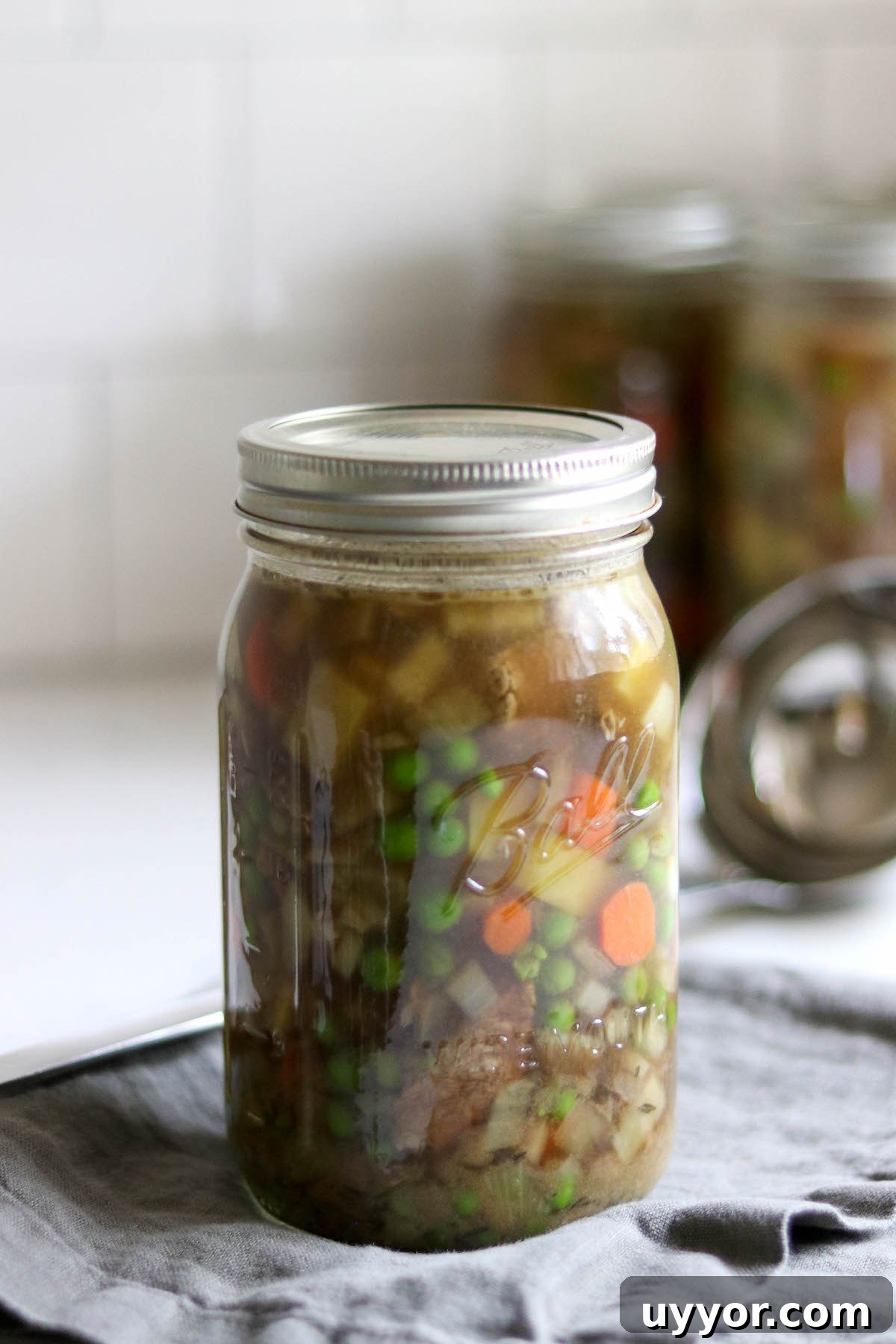
Processing Times for Hearty Soups
Process hearty soups for 75 minutes for pints and 90 minutes for quarts. These times do not change with elevation; adjust pressure instead.
If a hearty soup contains seafood, process only in pint jars for 100 minutes. Do not can hearty seafood soups in quarts.
Altitude pressure adjustments are the same as listed for brothy soups.
Shelf Life of Home Canned Soups
Properly processed, sealed jars of pressure-canned soup can be stored on the pantry shelf for a long time. Quality typically declines after 12–18 months, though sealed jars remain safe to eat beyond that timeframe. Refrigerate after opening.
Reheating Your Canned Soups
Most home-canned soups are best heated on the stovetop: pour into a saucepan and simmer for about 10 minutes. You can also remove the metal lid and ring and microwave in the jar. Some jars are intended as soup bases—add cream, puree, or extra ingredients at serving time as desired. Ingredients not safe to can, like rice, pasta, dumplings, or coconut milk, can be added when serving.
Soup Canning Recipes
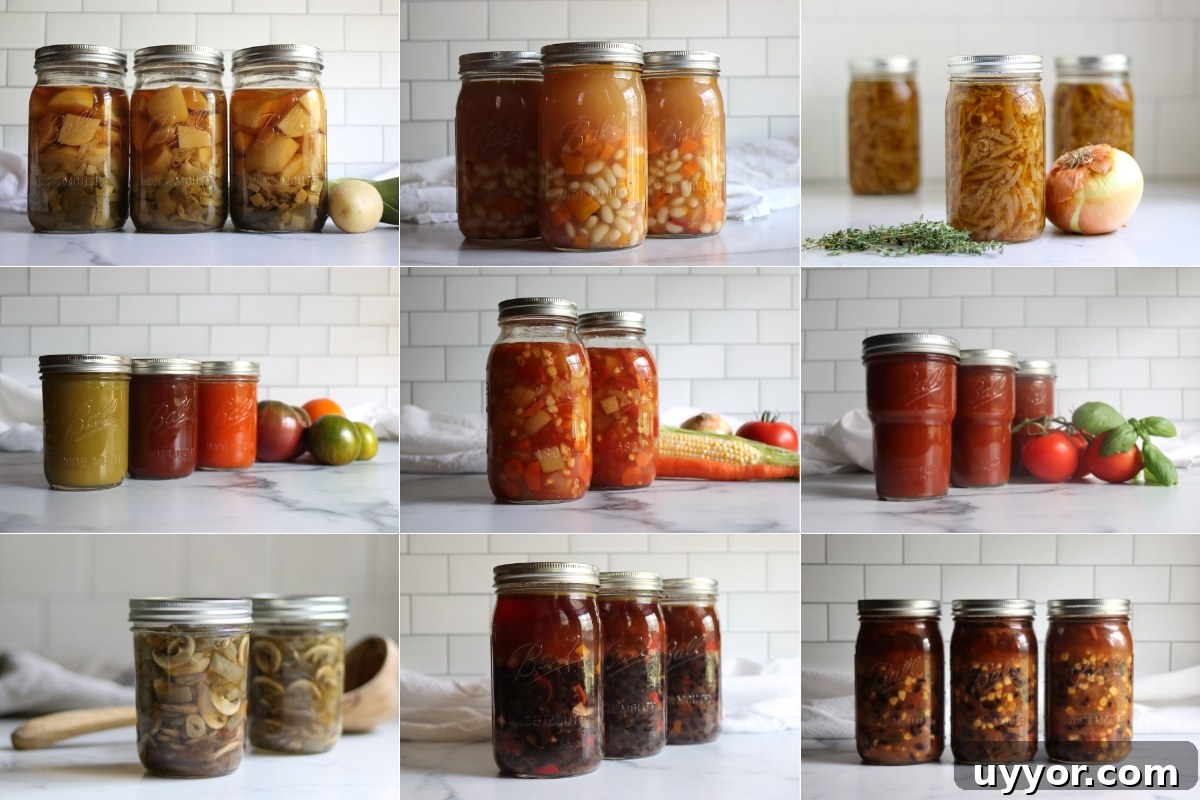
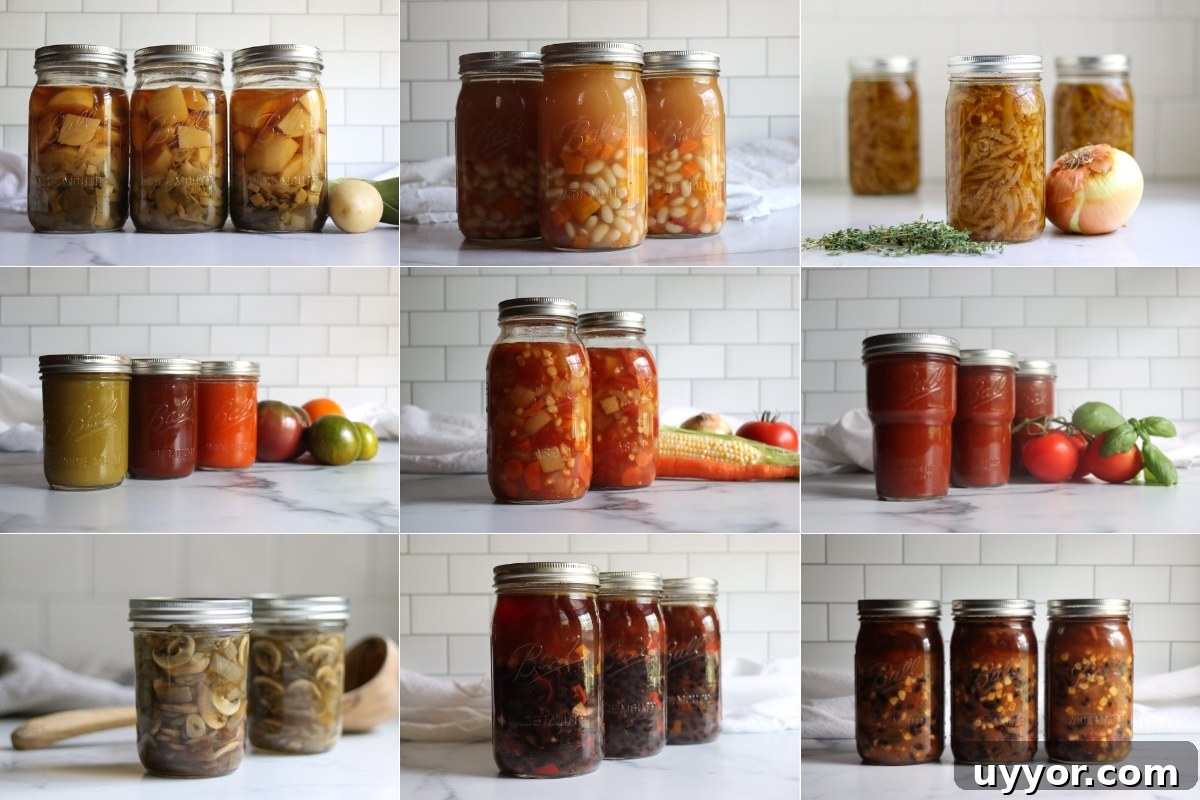
Below are example recipes to inspire your own creations. Use the guidelines above to adapt ingredients and packing methods safely.
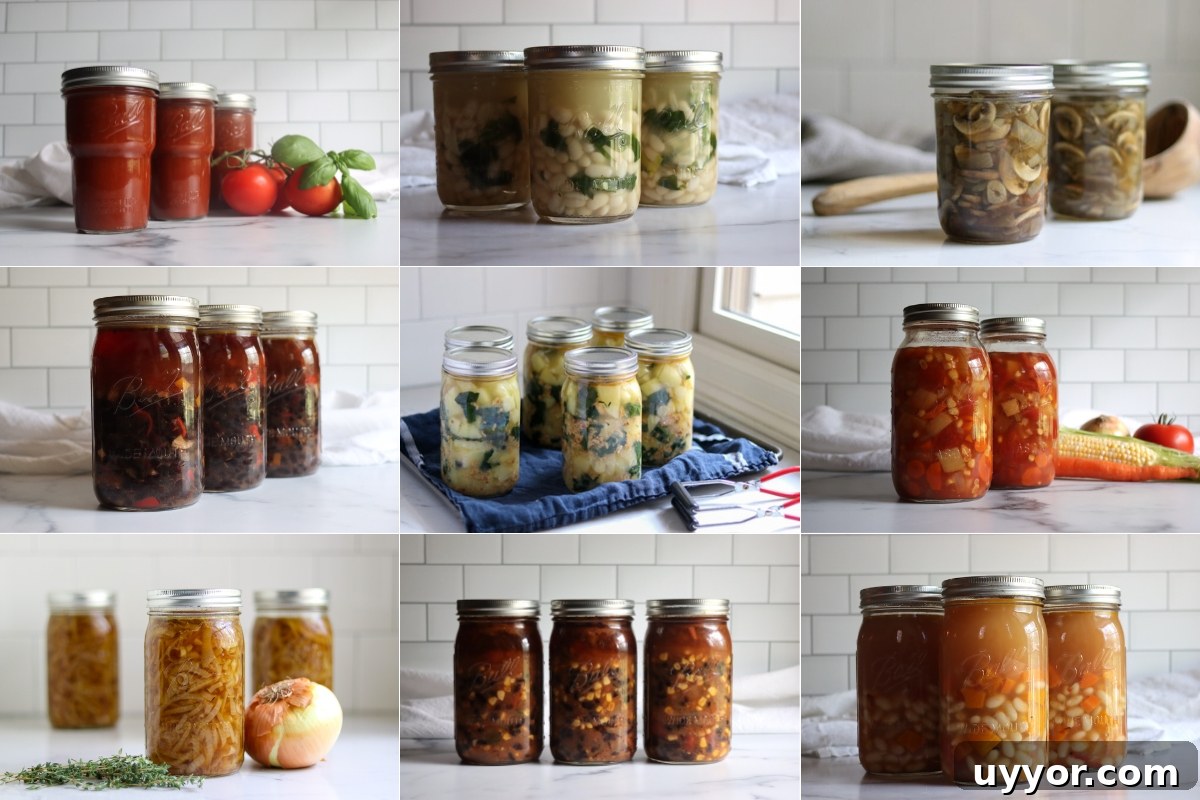
Brothy Soup Canning Recipes
- Classic chicken soup
- Chipotle black bean soup
- Cuban black bean soup
- Taco soup
- Butternut squash and white bean soup
Hearty Soup Canning Recipes
- Potato leek soup base
- Nordic salmon soup
- Chicken pot pie filling
Meal-in-a-Jar Recipes Using Hearty Soup Process
Hearty soup canning guidance applies to many meal-in-a-jar recipes, such as chipotle beef taco meat, beef stroganoff, sloppy joe filling, or vindaloo curry—always follow the ingredient restrictions and processing times for safety.
Pressure Canning Soup
Equipment
- Pressure canner
- Regular-mouth pint and quart canning jars
- Canning lids and bands
- Jar lifter
- Canning funnel
Ingredients
For Brothy Soups:
- Fresh vegetables (carrots, celery, bell peppers)
- Meat (chicken, beef, pork) cut into pieces
- Fish in small pieces (optional)
- Pre-soaked and rehydrated beans (optional)
- Broth, water, stock, wine, or juice
- Fresh or dried herbs and spices
For Hearty Soups:
- Fresh vegetables (potatoes, carrots, peas)
- Meat (beef, pork, chicken, or seafood)
- Broth, stock, or water
- Fresh herbs and spices
Instructions
For Brothy Soups:
- Prepare vegetables, meat, seafood, and rehydrated beans as described above.
- Combine solids in a pot, add enough liquid to cover plus 2–3 inches, bring to a boil, simmer 5 minutes.
- Fill jars: solids to halfway, top with liquid leaving 1-inch headspace. Remove air bubbles, wipe rims, and apply lids.
- Process in a pressure canner 60 minutes for pints or 75 minutes for quarts. Increase to 100 minutes if the recipe contains seafood. Adjust pressure for altitude.
- Cool jars, check seals, and store in a cool, dark place.
For Hearty Soups:
- Prepare vegetables and meats as for brothy soups; preheat solids in hot broth and simmer 5 minutes.
- Packed jars: fill jars with solids to 1-inch headspace, add hot broth, remove air bubbles, and seal.
- Process 75 minutes for pints and 90 minutes for quarts. If using seafood, process only pints for 100 minutes. Adjust pressure for altitude.
- Cool, confirm seals, and store in a cool, dark place.
Notes
- Brothy soups are filled half with solids and half with liquid when loaded into the canner. Beans expand during processing and may make jars appear fuller after canning.
- Hearty soups have stricter ingredient restrictions: do not add dry beans, leafy greens, winter squash, sweet potatoes, or cream-style corn.
- Never include dairy, thickening agents, pasta, rice, or any ingredient without specific canning guidance.
- Ensure each ingredient is prepped according to its individual canning recommendations; some items require pre-cooking.
- Minimum batch size for pressure canning is 2 quarts or 4 pints to ensure adequate thermal mass.
- Properly sealed jars remain safe for an extended time, though quality often declines after 12–18 months. Refrigerate after opening.
Altitude Adjustments
Dial Gauge Canner:
- 0–2,000 ft: 11 lb
- 2,001–4,000 ft: 12 lb
- 4,001–6,000 ft: 13 lb
- 6,001–8,000 ft: 14 lb
Weighted Gauge Canner:
- 0–1,000 ft: 10 lb
- Above 1,000 ft: 15 lb
Reheating Instructions
Stovetop: Pour soup into a saucepan and simmer for about 10 minutes.
Microwave: Remove metal lid and ring, then microwave directly in the jar.
Nutrition
Nutrition information is an approximation.