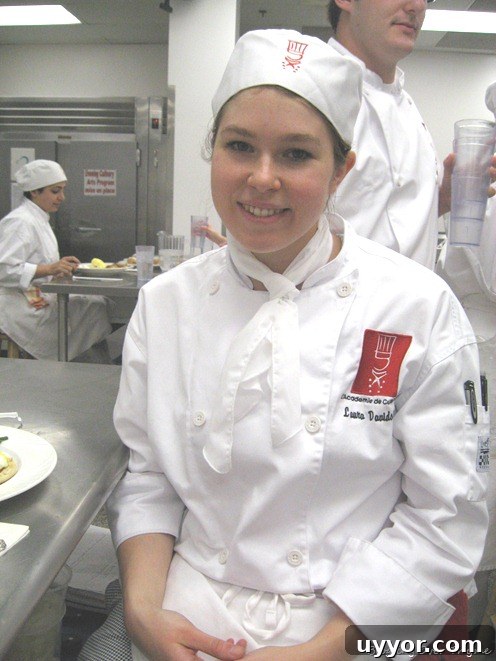
After two full days spent on sanitation last week and a relaxing four-day weekend, I worried we might all be out of rhythm in the kitchen by Tuesday morning. True to my new (and admittedly obnoxious) habit, I woke up every hour or two Monday night anxious I would oversleep. Fortunately that didn’t happen: I arrived early, helped set up the classroom, and was seated in the lecture room by 7:00 a.m.
When I looked up at the whiteboard and saw the day’s menu, my nerves increased—today was officially HOLLANDAISE day. Our chef jokingly calls it “the sauce that smells fear.”
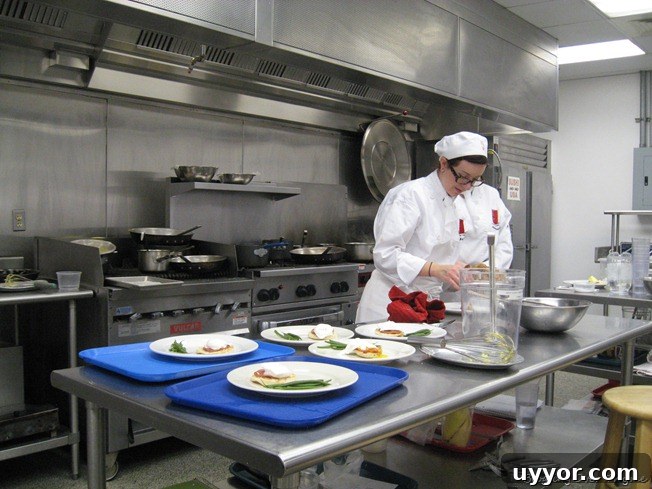
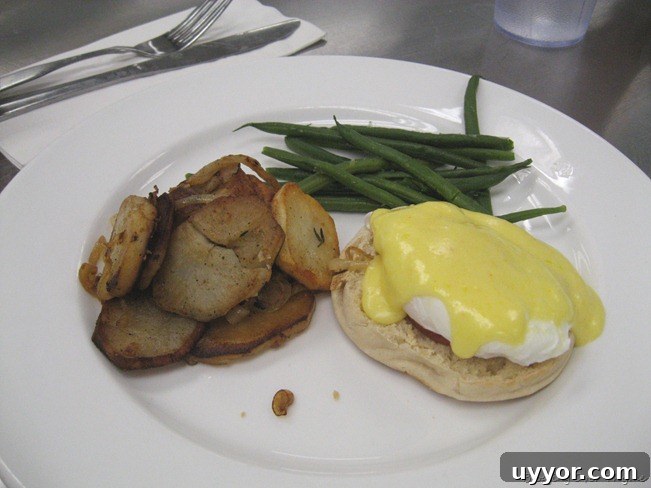
By tradition our hollandaise would be served as part of Eggs Benedict. Eggs Benedict has never been my favorite, but I was excited—and a bit apprehensive—to learn how to make the sauce from scratch.
Hollandaise is one of the five classic mother sauces; the others are velouté, tomato, béchamel, and brown sauce (sauce espagnole), which we’ll learn soon. Hollandaise uses just a few ingredients: clarified butter, egg yolks, cayenne pepper, lemon juice, and salt. Clarified butter—regular butter with the milk solids removed—has a higher smoke point and helps emulsify and thicken the sauce because it lacks the water that can interfere with emulsification.
Making hollandaise itself isn’t overly difficult; the real challenge is holding it and preventing it from breaking or curdling. In a restaurant setting, sauces must often be prepared ahead of service, so controlling temperature is critical. Hollandaise has four enemies: too hot, too cold, too thick, and too thin.
To prepare hollandaise, egg yolks (with a splash of water) are heated over a bain-marie—a simmering double boiler—until they increase in volume and thicken enough that a whisk leaves a trail through the mixture. Remove the yolks from the heat and emulsify them by whisking in clarified butter, typically at a ratio of about one egg yolk to two ounces of clarified butter. Finish by seasoning with cayenne, salt, and lemon juice. The lemon is essential: enough acid should be present to cut through the fat so people will want another bite. Since hollandaise is largely fat, a bright, noticeable lemon flavor keeps the sauce lively rather than cloying.
Although I started nervous, my hollandaise didn’t break, even though I made it well before service. It turned out very well—though I could have added more lemon and seasoning. If a hollandaise starts to break, the usual fix is to whisk in a small amount of warm water to bring it back together.
Our hollandaise was served Benedict-style atop poached eggs. This was our first time preparing poached eggs in class. I had poached eggs at home with mixed success, so I was eager to learn the professional technique.
We filled a pan with about four inches of water, added distilled white vinegar to tighten the egg whites, and heated until small bubbles formed on the bottom. To keep whites from scattering, we cracked each egg into a ramekin and gently lowered it into the simmering water. The egg should sink, with the whites tightening and eventually carrying the egg to the surface.
Because restaurants can’t poach to order for large services, we learned to poach and hold eggs for reheating. The process is to cook the eggs until the whites are mostly set, transfer them to an ice-water bath in a sieve or basket to stop cooking, and then reheat them in hot water just before service. That’s how kitchens handle large volumes of Eggs Benedict while keeping quality consistent—a technique I found fascinating.
Coordinating holding and reheating foods for service is one of the trickiest parts of running a menu. Timing and temperature control often determine whether a dish comes together smoothly.
Our Eggs Benedict was plated with Les Pommes de Terre Sautées Lyonnaise and Les Haricots Verts à l’Anglaise—sauteed potatoes with onions and simply cooked green beans. The potatoes were sliced about 1/4 inch thick, patted dry, and cooked in clarified butter over high heat. By not crowding the pan and laying the slices in a single layer, we ensured even browning and prevented sticking. When the potatoes were browned, we added thinly sliced onions and cooked them until slightly caramelized, finishing with a touch of thyme for a classic diner-style side.
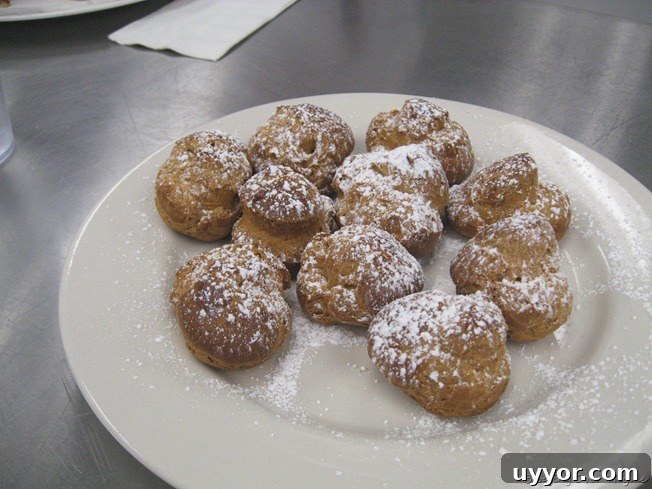
In the same class we also made pâte à choux, the pastry dough used for éclairs and cream puffs (pictured above). The technique is straightforward but requires attention when piping and baking so the interior dries out and becomes nearly hollow. Once baked, the shells were filled with pastry cream, which we prepared from scratch. Practicing similar recipes at home over the weekend helped me feel more confident handling the components.
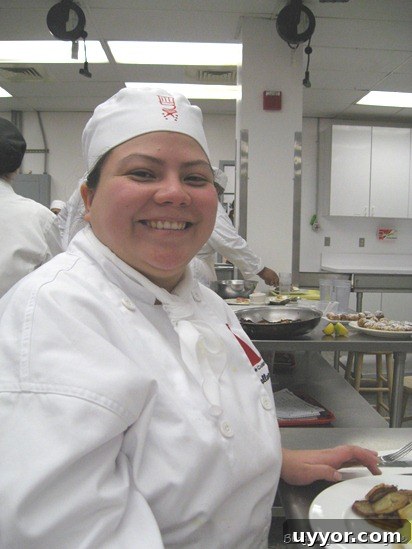
Work table partner of the day, Blanca!
All of that was served at lunch.
In the afternoon we had a lecture with our school director, Chef François, who introduced the topic of meat. From now on, Tuesday afternoons will focus on meat and butchery—an area I know almost nothing about, so I’m looking forward to learning.
Now I’m off to write my first paper for school; I’ll present it briefly tomorrow. Yes, I wrote a four-page paper on saffron—welcome to my life.
P.S. A quick note: this post is a bit delayed because I had to sit outside my apartment for over an hour today while a small fire in my building was extinguished. Thankfully no one was hurt and the fire was put out. My apartment is three floors up and smelled faintly of smoke when I returned—what a strange day.