Beef jerky is one of the most popular snacks: chewy, satisfying, high in protein, and available in countless flavors. Before you stock up, however, it’s important to understand how long jerky stays safe and tasty.
This guide explains typical shelf life for store-bought and homemade jerky and offers practical storage tips to keep your jerky fresh longer.
NOTE: This article was reviewed by Melissa Macher, Registered Dietitian and Food Scientist for safety and accuracy.
How Long Does Beef Jerky Last?
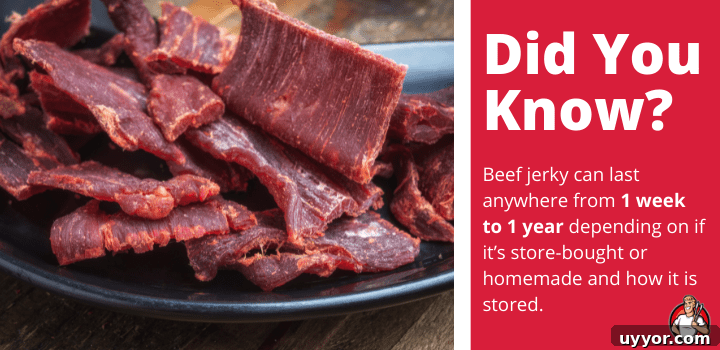
Beef jerky’s lifespan varies widely depending on whether it’s store-bought or homemade and how it is stored. In general, jerky can last anywhere from about one week to one year.
Store-bought jerky that is properly produced and stored can remain good for roughly 6 months to a year. Homemade jerky typically lasts much less time—about 1 to 2 months—assuming proper preparation and storage (meat heated above 165°F and dried at 130–140°F throughout the drying process).
Read on to learn which storage methods work best and how to extend the shelf life of your jerky.
Properly Storing Beef Jerky
How you store jerky has a major impact on how long it lasts. Common storage options include:
- Original bag
- Ziplock or resealable plastic bag
- Vacuum-sealed packaging
Here are the advantages and limitations of each method so you can choose what fits your situation.
Original Bag
Most commercial jerky is packaged in plastic bags that often include a resealable top and a food-grade desiccant packet. Leaving jerky in its original unopened bag is usually the best option because the packaging and desiccant are designed to preserve product quality.
Ziplock Bag
If the original packaging is damaged or you made your own jerky, a resealable plastic bag is a convenient short-term solution. A Ziplock bag can keep jerky fresh for about two weeks at room temperature or up to three weeks in the refrigerator, but it’s not ideal for long-term storage.
Vacuum Sealed
Vacuum sealing is the best home storage method for long-term freshness. Removing air slows oxidation and helps prevent spoilage while retaining the jerky’s texture and flavor.
Store-bought jerky placed in a vacuum-sealed bag can stay fresh for many months and up to a year if frozen. Homemade jerky stored this way will typically remain good for around two months, depending on preparation and moisture content.
How to Know When Beef Jerky Has Gone Bad
If you find a forgotten package of jerky in the fridge or pantry and aren’t sure whether it’s still good, use these cues to decide.
For store-bought jerky, check the “best by” or expiration date on the bag. If the jerky is significantly past that date—especially by a month or two—it’s safer to discard it. If you don’t have the bag or it’s homemade, inspect the jerky directly.
Spoiled jerky doesn’t always smell strongly, but any off or sour odor that isn’t part of the flavor profile (for example, not teriyaki) is a red flag. Also examine color and texture: jerky that’s darker than expected or excessively hard may have gone bad. Any visible mold on one piece generally means the entire batch should be discarded.
If the product looks and smells normal but tastes unpleasant or strange, stop eating it and throw it out.
What Happens When You Eat Beef Jerky That Has Gone Bad?
Eating spoiled meat, including jerky, can lead to foodborne illness. Symptoms can include stomach pain, cramps, fever, nausea, vomiting, and diarrhea. These effects can last several days.
If you suspect you became ill after eating questionable jerky, seek medical advice promptly. When in doubt, it’s safer to discard jerky than risk becoming sick for several days.
Keeping Your Beef Jerky Fresh for Longer
To avoid wasting jerky and to keep batches tasty, follow these helpful practices:
- Make leaner jerky
- Minimize oxygen exposure
- Dry thoroughly for the appropriate time
- Keep jerky away from direct sunlight and heat
- Consider using curing agents cautiously
- Freeze for longer storage when necessary
Make Leaner Jerky
Fat shortens jerky’s shelf life because fat oxidizes and goes rancid faster than lean meat. Trim visible fat before drying or use leaner cuts to extend longevity.
Minimize Oxygen Exposure
Exposure to air accelerates spoilage. For commercial jerky, avoid opening a bag until you plan to finish its contents within a short period. For homemade jerky, use airtight containers or vacuum sealing and avoid making more than you can consume in a reasonable timeframe.
Drying Length
Proper drying reduces moisture that promotes mold growth. Follow recommended drying times for the meat cut and thickness you use so jerky is sufficiently dried but not overcooked or brittle.
Keep Jerky Away From the Sun
Store jerky in a cool, dry, dark place like a pantry or cupboard away from sunlight and heat sources. Avoid cabinets above stoves or other spots that receive intermittent heat.
Use a Cure
Commercial jerky often contains curing agents such as sodium nitrite or sodium nitrate to extend shelf life. While curing can prolong longevity, these chemicals may not be desirable for regular home use and require careful handling and accurate measurement.
Freeze It
Freezing jerky is an option for long-term storage when you have more than you can consume quickly. Pack jerky in airtight freezer-safe containers or vacuum-sealed bags. Note that freezing can slightly change texture and flavor, so many prefer to reserve freezing for excess quantities.
Final Thoughts Storing Jerky
Jerky is a durable snack, but it can still spoil. Buy or make only as much as you can reasonably eat before the expiration date, and follow best-practice storage methods to maximize freshness.
For homemade jerky, plan to consume most of a batch within a week or two unless you use vacuum sealing and refrigeration or freezing. Freshly made jerky typically offers the best taste and texture, but with proper care you can safely store jerky longer when needed.