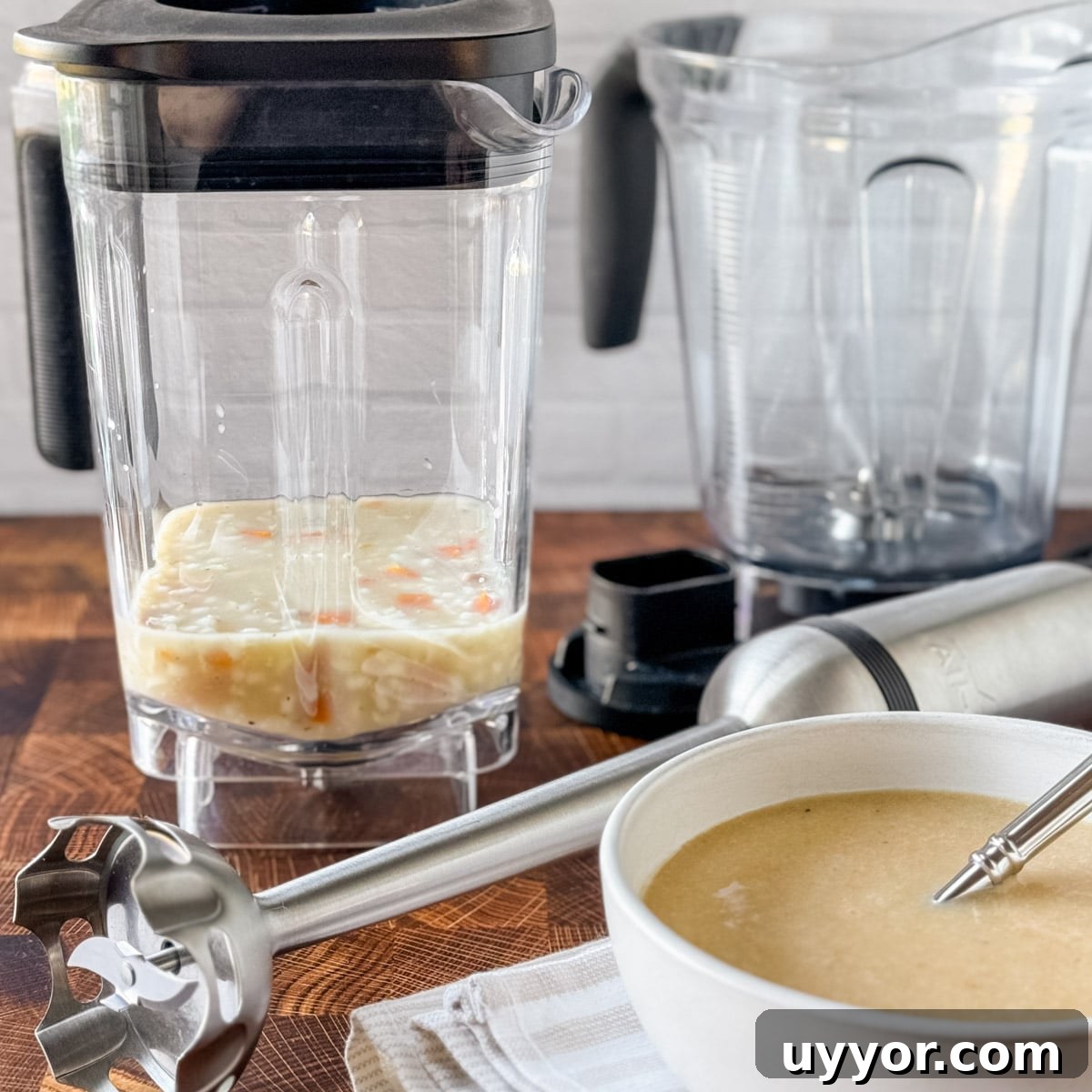
If you enjoy making homemade cream soups and sauces, you’ve likely needed to puree them while still hot. Many recipes—ours included—warn you to be cautious, and for good reason: blending hot liquids can be hazardous. Below are practical, safety-focused tips and techniques for blending hot liquids effectively so you can handle recipes that call for this step with confidence.
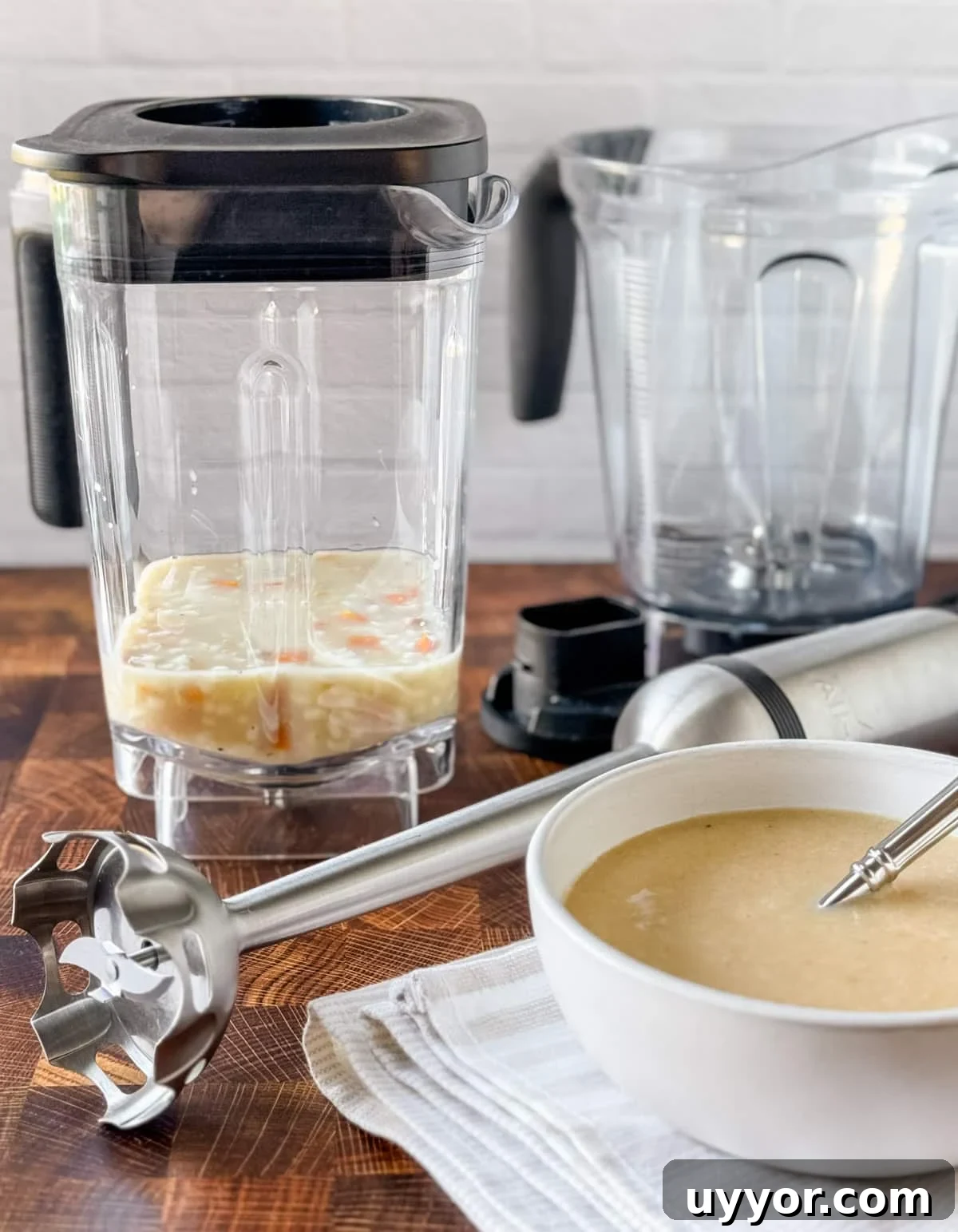
This post contains affiliate links. As an Amazon Associate, I earn a commission (at no additional cost to you) from qualifying purchases made by clicking these links. All recommendations and opinions expressed are my own.
Why blending hot liquids can be dangerous
Stories and videos of blender “eruptions” are common: lids popping off and hot soup splattering across the kitchen. The danger arises from a simple combination of heat, expansion, and pressure.
As a liquid heats, it expands. Blending introduces air and agitation, which increases that expansion and can create overflow. More importantly, hot liquids produce steam. If steam becomes trapped in a sealed container, pressure can build and force the lid off, sending scalding liquid out of the blender.
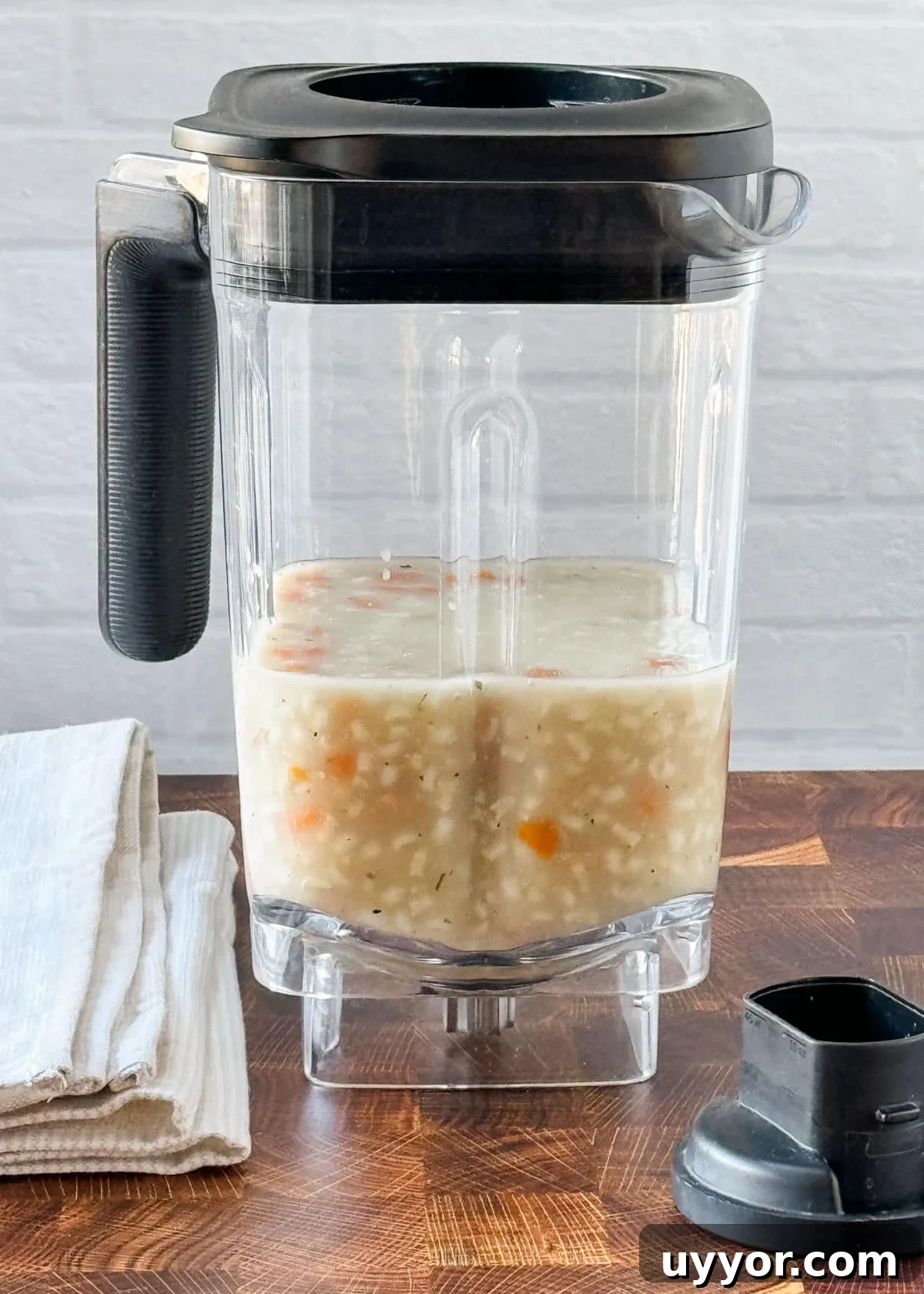
Using a countertop blender safely
Whether you have a conventional countertop blender or a high-speed model, follow these steps when working with hot liquids.
- Cool slightly before blending. Let very hot liquids cool for a short time before transferring them to the blender. Avoid blending boiling or near-boiling liquids. Check your blender manual for maximum safe temperatures.
- Do not overfill. Fill the blender jar no more than halfway with hot or warm liquids to allow room for expansion and to reduce splatter risk.
- Vent the lid. Many blender lids include a removable center plug or a vented cap. If your lid has a vented plug, it may be safe to leave in place while blending. If it isn’t vented, remove the plug and cover the opening with a folded kitchen towel to allow steam to escape while keeping splashes contained.
- Hold the lid down. Firmly hold the lid with one hand while blending and drape a towel across the top for extra protection. Make sure the lid is seated securely before starting.
- Start on low. Begin on the lowest speed and gradually increase once the liquid starts to move smoothly. Sudden high speeds can cause splashes and increase pressure.
- Watch and listen. Pay attention to motor sounds and feel for pressure building under the lid or towel. If you sense pressure, stop and allow the mixture to cool further before continuing.
- Turn off and let settle. When blending is complete, turn off the blender and wait a moment for the contents to settle before removing the lid.
- Pour carefully. Use oven mitts or a thick towel to handle a hot blender jar, and pour slowly to avoid splashing.
- Blend in batches. For larger quantities, work in smaller batches. This improves safety and produces a more consistent puree without overworking the motor.
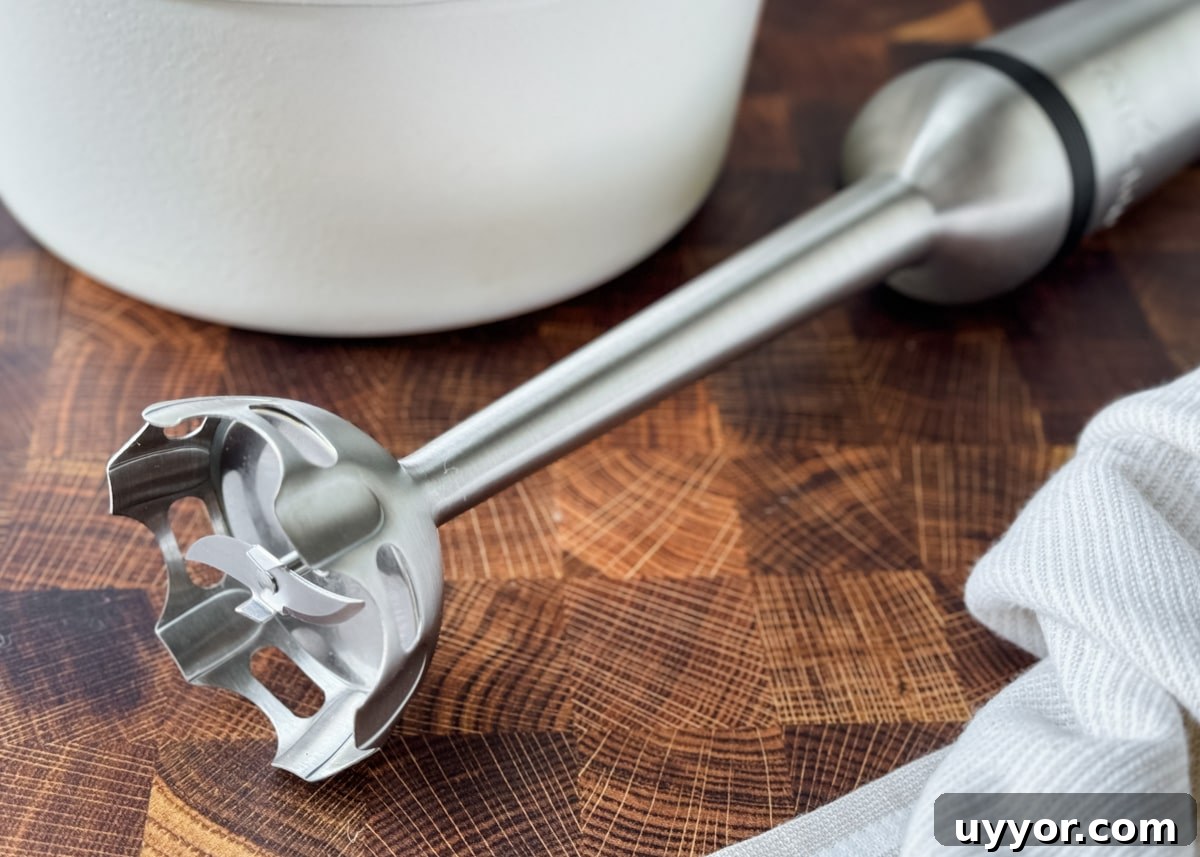
Using an immersion (stick) blender
Immersion blenders are convenient for pureeing soups and sauces directly in the pot, avoiding transfers that can be awkward and risky. They can yield smooth results when used correctly.
Tips for safe immersion blending:
- Secure attachments. Make sure the blending arm and any attachments are properly attached before operating the unit.
- Keep the head submerged. Use a pot deep enough to keep the blade head submerged to prevent splashing. Never run the blender with the head above the liquid surface.
- Leave headroom. Don’t fill the pot to the brim. Keep liquid to roughly two-thirds full to allow for expansion and movement.
- Tilt for control. In wider pots, tilting slightly helps pool the liquid and improves circulation for a smoother blend—only tilt when it’s safe to do so.
- Pulse first. Use short pulses to break up large chunks before switching to a continuous speed. Start low and increase gradually as needed.
- Sweep gently. Move the blender in slow, steady sweeps around the pot rather than holding it in a single spot.
- Avoid scraping the bottom. Be cautious about pushing the blender against the pot bottom; this can cause splashes or damage if the blade lacks a guard.
- Let things cool a bit. Even though immersion blenders handle heat well, allow very hot liquids to cool briefly—typically 10–20 minutes—before blending to reduce steam and splatter risk.
General safety tips
- Protect yourself. Wear an apron and consider oven mitts to guard against accidental splashes.
- Keep clear of steam. Keep your face and bare skin away from the top of a blender or pot. Steam and splashes can cause burns, especially when removing lids.
- Stabilize your workspace. Place the blender or pot on a flat, stable surface. Wipe wet countertops dry and, when using an immersion blender, consider a nonslip surface or trivet to keep the pot secure.
Disclaimer: These tips are general best practices for blending hot liquids and are not exhaustive. Always follow your specific appliance’s safety guidelines and use your best judgment. Some blender models include features or instructions designed to handle steam and pressure safely.