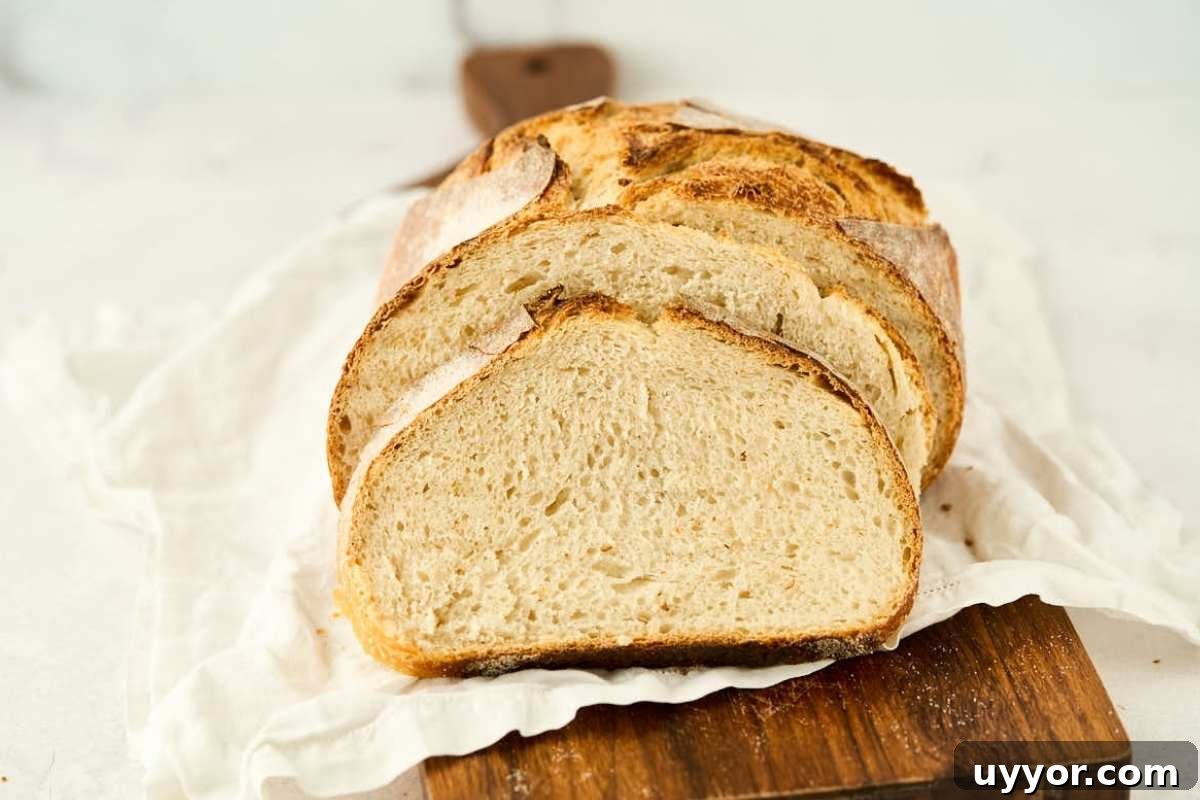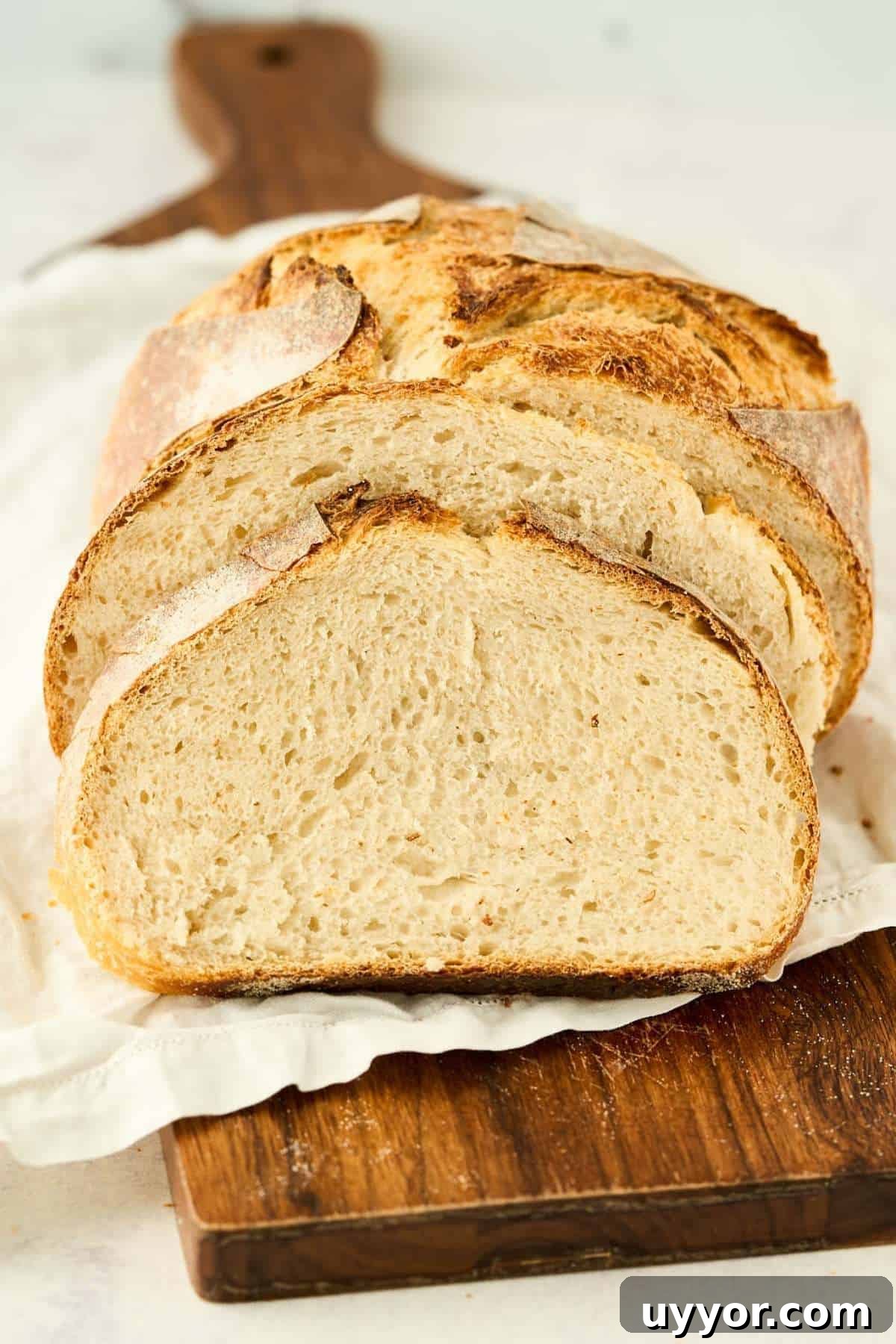
Sure, you could stretch and fold all day (and sometimes I do), but you absolutely don’t have to. If sourdough has always felt confusing or too hands-on, this stand mixer sourdough bread recipe is the perfect solution. Like a classic bread recipe, we mix, knead, shape, rise, and bake—simple and reliable.
This is one of those sourdough bread recipes you’ll come back to again and again.

Stand Mixer Sourdough Bread

Katie Shaw
Equipment
- Stand mixer (with dough hook attachment)
- Mixing bowls
- Damp tea towel or clean kitchen towel
- Plastic wrap
- Proofing baskets (or parchment-lined baking sheets)
- Dutch oven
- Parchment paper
- Lame or serrated knife
- Cooling rack
Ingredients
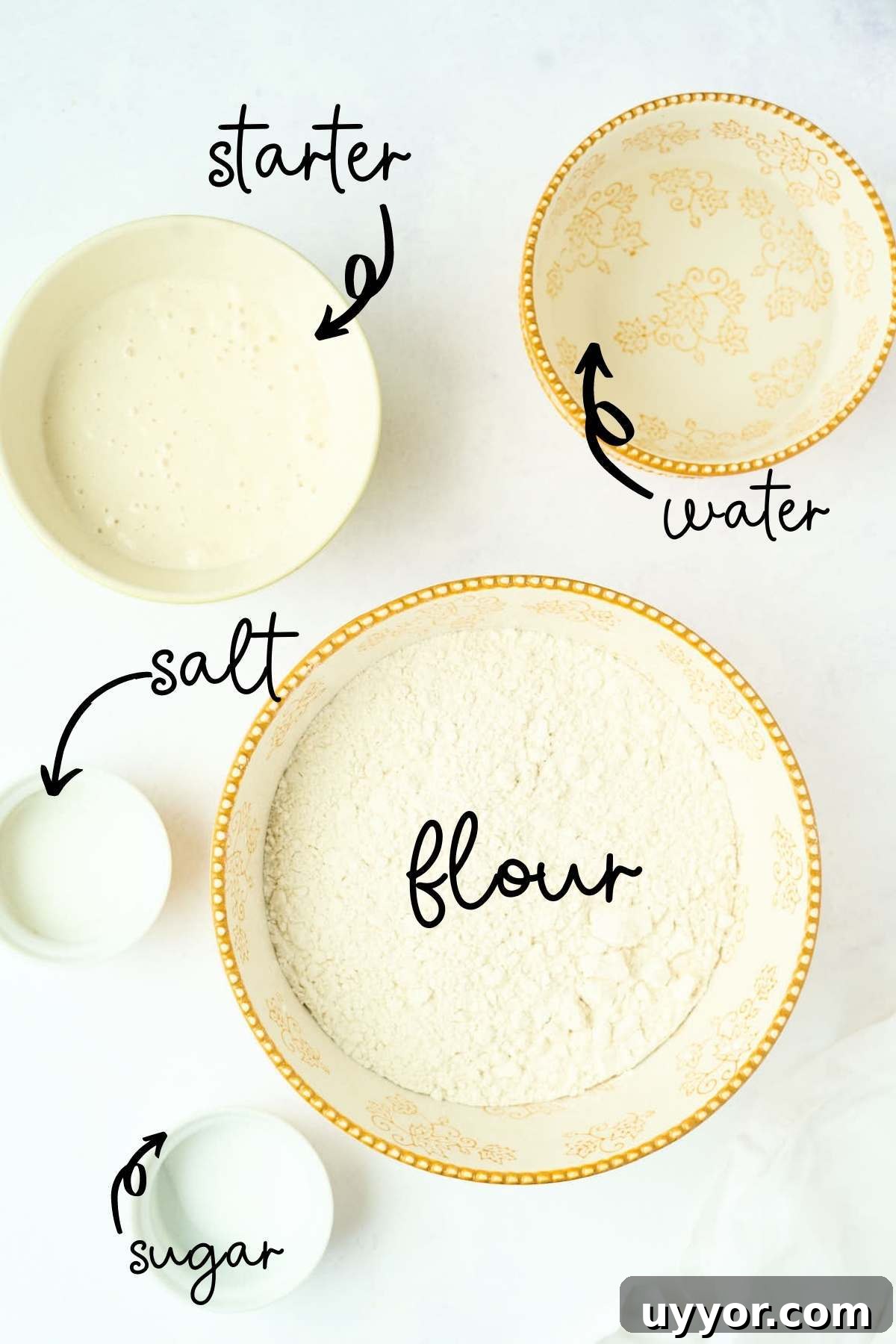
- 6 cups bread flour (about 31.8 ounces)
- 2 cups lukewarm water (about 16 ounces)
- 1 ½ cups active sourdough starter (about 11.25 ounces)
- 1 tablespoon sugar
- 3 ½ teaspoons salt
Instructions
-
Combine the ingredients. In the bowl of your stand mixer, add the bread flour, active sourdough starter, sugar, and lukewarm water. Mix on low until just combined; the dough will look rough and slightly dry. Cover with a damp tea towel and let rest at room temperature for 30 minutes.
Tip: Measure the salt and place it nearby so you remember to add it in the next step.
-
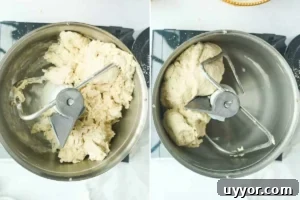
Knead the dough. After the autolyse, add the salt and knead on low with the dough hook for 5–9 minutes, until the dough is smooth and forms a ball that cleans the sides and bottom of the bowl. If the dough feels too dry, add a little water; if it’s too wet, add a bit more flour.

-
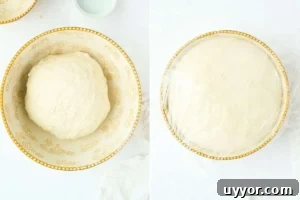
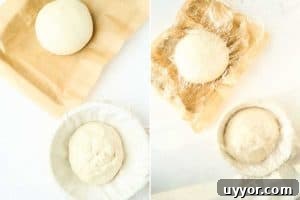
First rise. Shape the dough into a smooth ball and place it in a lightly oiled bowl. Cover with greased plastic wrap and let rise in a warm spot for 3–4 hours, or until doubled and very puffy.
-
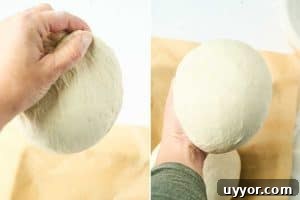
Divide and shape. Once risen, divide the dough in half. Gently shape each piece into a smooth ball by pulling the dough from the bottom and tucking it underneath until the surface is tight.
-
Second rise. Place each ball into a flour-dusted proofing basket or onto a parchment-lined baking sheet. Cover tightly with greased plastic wrap and refrigerate overnight or up to 18 hours.
-
Bake. Preheat your oven to 425°F (220°C) with an empty Dutch oven inside. Score the top of each loaf with a lame or serrated knife. Transfer a loaf on parchment into the hot Dutch oven, cover, and bake 25 minutes. Remove the lid and bake another 20 minutes, until deep golden brown.
-
Cool and slice. Remove the loaf from the Dutch oven and cool on a rack for at least 4 hours before slicing. Store at room temperature in a bread bag or airtight container for up to 4 days.


Notes
Make sure your starter is active and bubbly. Feed it 4–6 hours before you begin.
Using a kitchen scale to weigh flour, water, and starter improves consistency—important with sourdough.
Keep the measured salt nearby during the initial mix so you don’t forget to add it.
If the dough is sticky, add a little more flour; if too dry, add a splash of water. Flour type and humidity affect hydration needs.
Cover the dough with a damp towel during rests and the first rise to prevent drying.
Wait at least 4 hours before slicing a fresh loaf—cutting too soon can make the crumb gummy.
Score the dough with a sharp blade to control expansion; shallow cuts can cause unexpected cracking.
Nutrition
Carbohydrates: 28 g
Protein: 4 g
Fat: 1 g
Sodium: 408 mg
Fiber: 1 g
At first, you might love the ritual of stretching and folding. But sometimes you want a reliable fermented loaf without babysitting the dough every hour. That’s when this recipe shines—your mixer does the heavy lifting while you get a great sourdough with minimal hands-on time.
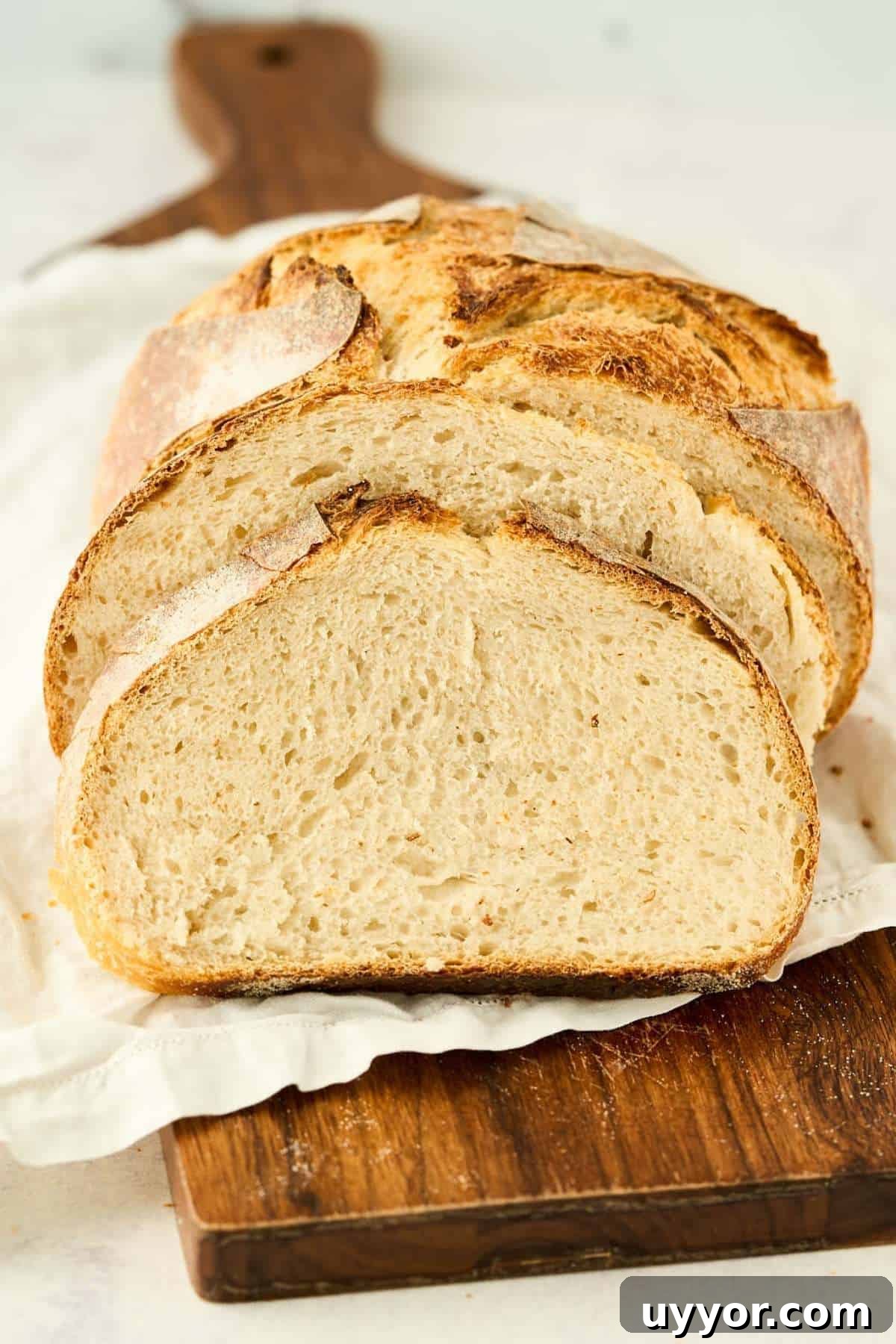
I’m sure you’ll enjoy this bread as much as we do.
Sourdough Tips
- Room temperature matters: if your kitchen is cool, allow longer rise times and judge by the dough’s appearance rather than the clock.
- At high altitudes, adjust baking times and temperatures as needed.
- Preheat the Dutch oven for at least 30 minutes to build steam for a crisp crust.
- Be gentle shaping the dough for the second rise to preserve air pockets.
- Use parchment to transfer dough into a hot pot safely.
- If you don’t have a stand mixer, try a hands-off bread machine or mix by hand—both work with slight technique changes.
Key Ingredients and Tools
These items will make the process easier and help you get consistent results:
Sourdough starter: Use a healthy, active starter. If you don’t have one, you can make your own or obtain a ready starter from a trusted source.
Bread flour: Preferred for its higher protein, which yields better structure and chew. All-purpose flour can be used in a pinch.
Sugar: Honey or maple syrup can replace sugar if you prefer.
Dutch oven: A heavy lidded pot traps steam and builds a great crust. If unavailable, use a deep baking pan with a tray of water for steam.
Lame or serrated knife: A sharp tool for scoring helps the loaf expand where you want it to during baking.
Serving Suggestions
This loaf is perfect for sandwiches, toast, and any use you’d save for a classic white or country loaf.
Troubleshooting and Help
Feed the starter and wait 4–6 hours. If it doubles and becomes bubbly, it’s ready. The float test (a small spoonful floats in water) is another quick check.
Add flour a tablespoon at a time if it’s sticky, or a splash of water if it’s dry. Sourdough hydration can vary with starter activity and humidity.
Ensure your starter was active before mixing and allow the dough to rise in a warmer spot. If needed, give it more time—sourdough is forgiving if you’re patient.
Yes. After you’re comfortable with the basic recipe, add herbs, garlic, or seeds during the initial mix so they incorporate evenly.
A banneton helps the dough keep its shape during the final rise and gives an attractive, floured pattern. Dust it well with flour to prevent sticking.
Storage Instructions
Once cooled completely, store the loaf in a bread bag, linen towel, or airtight container to keep the crust crisp and the crumb soft. The bread stays fresh for up to 4 days at room temperature. Avoid refrigerating, which dries bread out faster.
To freeze, wrap the cooled loaf tightly in plastic or foil, place in a freezer bag or container, and store up to one month. Thaw at room temperature and refresh the crust in a 350°F (175°C) oven for 10–15 minutes if desired.
Your stand mixer handles most of the hands-on work, making this an ideal method for busy days when you want great sourdough without constant attention.